When you picture a glass of wine, you’re likely to picture a glass of red. When you think of winemaking regions, Bordeaux and Burgundy — both predominantly known for their red wine — come to mind. And when drinkers are surveyed on their preferences, red comes out on top.
The instinctual default to red wines makes sense: Many of the most prestigious estates are most known for their reds. But nowhere is white wine more ripe for attention than in the regions where red grapes are most prolific. Red-centric zones are often gold mines for some of the world’s greatest white varieties, offering a counterpart to heavier reds with moments of light fruit.
Are the top-dog reds like Cabernet Sauvignon and Pinot Noir passé? Not necessarily. But white varieties are strutting their stuff right now, so here are the underrated white wines from historically red regions.
Aligoté From Burgundy, France
Until a few years ago, Aligoté might have been Burgundy’s best-kept secret. The variety grew in popularity in the past decade, but it still remains a largely unknown grape to the masses. Aligoté — also referred to as Bourgogne Aligoté — is a Burgundy-native grape and produces some of the region’s most unsung wines.
Much of Burgundy’s white scene is driven by the region’s Chardonnays, which account for the majority of the world’s most expensive wines. But Aligoté doesn’t mimic Chardonnay — instead, it adds a new dynamic to the region’s white wines. Known for its gripping acidity, lively fruit, and refreshing finish, Aligoté has the structure of a cool-climate white with the flavor of a hotter, riper fruit.
Arneis From Piedmont, Italy
Piedmont produces some of the world’s greatest light-bodied reds: Its three most common grapes are Barbera, Nebbiolo, and Dolcetto. But regions with quaffable reds are fertile ground for exceptional whites. That’s where Arneis comes in. Arneis produces perfumed, dry, and medium-bodied wines with rich flavors of orchard fruit, autumnal spice, and marzipan. In some ways, these wines are emblematically Italian — at once dry, floral, and strongly fruited. But in other ways, Arneis wines don’t harken to Italy at all: Italian whites, especially those raised on high-altitude plots, are structured with puckering acidity, but Arneis produces plush textures.
Viognier From the Rhône, France
The Mediterranean-adjacent region is a perfect storm for well-structured, robust reds. With fresh sea breeze, unforgiving sun, and staggering slopes, the Rhône’s red wines, especially the Syrahs, are some of the greatest in the world. That very terroir also lends itself to producing full-bodied whites that leave a long, silky finish on the tongue — often from the Viognier grape.
Due to the region’s abundant sun exposure, these wines record a relatively high ABV, and Viognier doesn’t produce much of an acid structure. But that’s part of its beauty: Viognier expressions leave a weight of orchard fruit and citrus on the palate, without the balance of acidity. With its floral, fruited qualities, the wine’s rich texture is something drinkers will keep wanting more of.
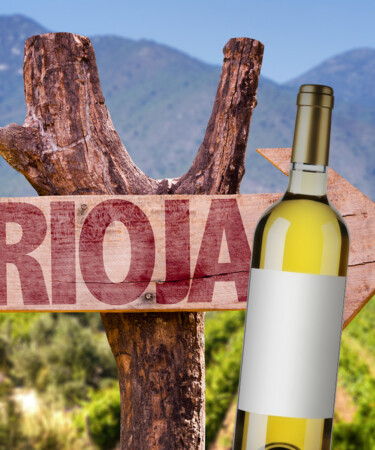
Viura From Rioja, Spain
Rioja’s reds are some of Spain’s most coveted wines, but the region’s burgeoning white scene — largely led by the trailblazer Viura — is gaining traction in worldwide markets.
Viura wines are unlike most warm-climate whites. They’re structured with a medium-to-light body, have average to low ABV, and reside in the higher range for acidity. Viuras from Rioja add a new elegance to a region known for its well-structured reds, as these wines are bright and refreshing on the palate with earth and citrus notes. The grape might be better known as Macabeo in Catalonia, where it’s the primary blending variety in Cava, the region’s take on sparkling wine.
Chardonnay From Beaujolais, France
Beaujolais drinkers are already fans of an easy-to-drink quaff. Gamay, the region’s staple grape, along with carbonic maceration, the fermentation method popularized and favored by many Beaujolais producers, together yield reds with unmatched levity. So they’d be remiss not to give Beaujolais Blanc, the pseudonym for Chardonnay produced in the region, a taste.
If Gamay from Beaujolais has a candy-like fruitiness, Chardonnays offer floral, aromatic, and fresh fruit flavors to the region’s portfolio. Chardonnays from Beaujolais balance the most desirable components of a white wine. High acidity, met with a cooling minerality imparted from limestone-rich soils, lifts the crisp and zippy flavors of orchard fruit.
Vermentino From Tuscany, Italy
Outshined by the hot, leathery wines from Chianti and some of the world’s most robust Sangioveses, Tuscany’s white scene is ready for attention. While the region’s rich, full-bodied reds can stand up to its famed meaty ragus, Vermentino is more of a thirst quencher under the Tuscan sun. High acidity, citrus fruit notes, and a mouthwatering salinity make Vermentino taste like lemonade for adults. On the nose, the wine is perfumed with floral and herbaceous notes and a minerality from rocky soils, balancing out its puckering palate.
