Sometimes, the apple falls far from the tree.
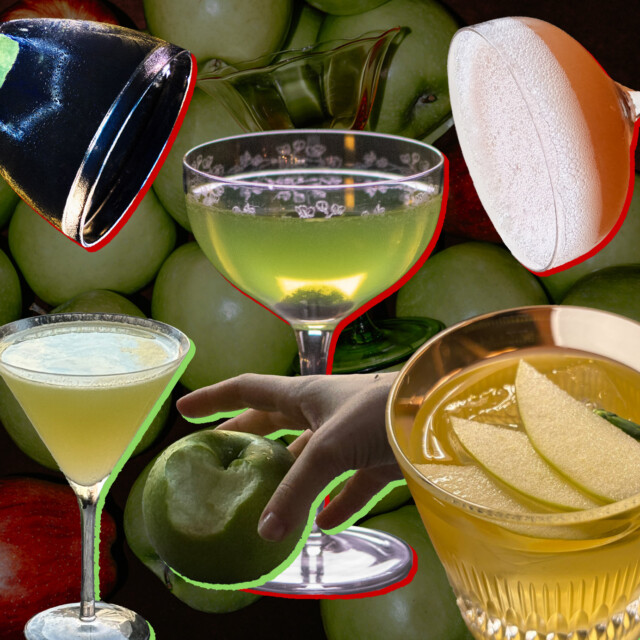
Appletinis are back. No, not the electric green, schnapps-laden concoctions of ’90s-parties past. Bartenders in New York City are dusting off the retro drink and polishing it into a thoughtful cocktail. But instead of the cloyingly sweet and unappetizingly neon profile of yore, these new Appletinis actually celebrate the orchard fruit the drink’s name bears.
Though some trace its roots to the 1970s, the Appletini first really hit the scene in 1997 when Loren Dunsworth, owner of Lola’s in Los Angeles, asked bartender Adam Karsten to whip up a cocktail using a bottle of Sour Apple Pucker schnapps that’d been sitting on the back shelf. Karsten’s drink — at the time, just a combo of the schnapps and vodka, drizzled with a touch of simple syrup — eventually took the nation by storm.
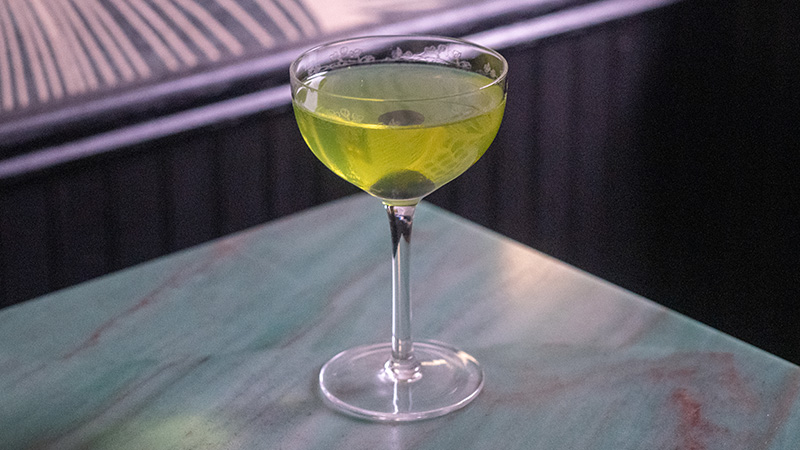
Before long, the Appletini — typically made with bright green schnapps or Midori liqueur — became popular nationwide at casual dining chains, dives, and cocktail bars alike, joining the ranks of Lychee, Espresso, and Pornstar Martinis. By the 2010s, these faux ’tinis that were once all the rage had largely fallen out of favor. Until recently, the Appletini was somewhat of a relic of America’s “Dark Ages,” representing the artificially flavored, fluorescent mixed drinks of the late 20th century.
But now the vintage cocktail is popping up on menus at bars and restaurants like Cecchi’s, Superiority Burger, Romeo’s, Bar Rêve, and even Le Bernardin. The push extends beyond the U.S.: In Paris, Harry’s New York Bar added an Appletini to its menu. So how did the cocktail stereotyped as tired and a bit tacky suddenly make a comeback?
Much like the first (and second) time around, the Appletini can credit the classic Martini’s limitless appeal for bringing it back into the limelight. The Martini has seen a serious spike in popularity over the past half-decade, with consumers embracing everything from traditional dry gin builds to MSG-spiked versions and beyond. So, it was only a matter of time before the flavored riffs reappeared.
Nostalgia also plays a role in the current Appletini-craze. Whereas in recent years, stunt ingredients and oddball garnishes have been en vogue, consumers are beginning to display an itch for comfortable, recognizable flavors again.
“People are starting to want approachable, sessionable drinks,” Ian Alexander, beverage partner at the East Village’s newly opened Limo Bar, says. “They don’t want to be educated in order to enjoy a cocktail.”
“A lot of bartenders are very nostalgic,” adds Laurel Delany, head bartender at Dean’s, an English pub and restaurant in Manhattan’s SoHo. Similar to the Appletini, drinks like the Pornstar Martini, Lemon Drop, and White Russian have also enjoyed a glow-up in recent years, with bartenders putting high-tech, modern spins on the other ’90s-era classics. With their old, familiar flavor profiles and outdated specs inviting innovation from the new generation of bartenders.
The Appletinis of today are a far cry from the technicolor ’tinis of the early aughts. Sour Apple Pucker, the artificially green apple schnapps that gave the original Appletini Green Apple Jolly Rancher-like appearance and flavor, is well in the past. Now, bartenders are experimenting with ingredients like local apple eaux-de-vie, small-batch Calvados, fresh-pressed apple juice, and quince syrups to express the orchard fruit’s crisp bite and sweet, tart, or sour character.
Most trends are cyclical, and today, you’re likely to find other bits of ’90s memorabilia like mom jeans and oversized sweaters on the streets. But even though the spirit of the Appletini might be back in a way, innovative bartenders are completely reimagining the drink. Here are three ways the Appletini you order today might be a bit different than the iconic glowing-green drink of the past.
Neon No More
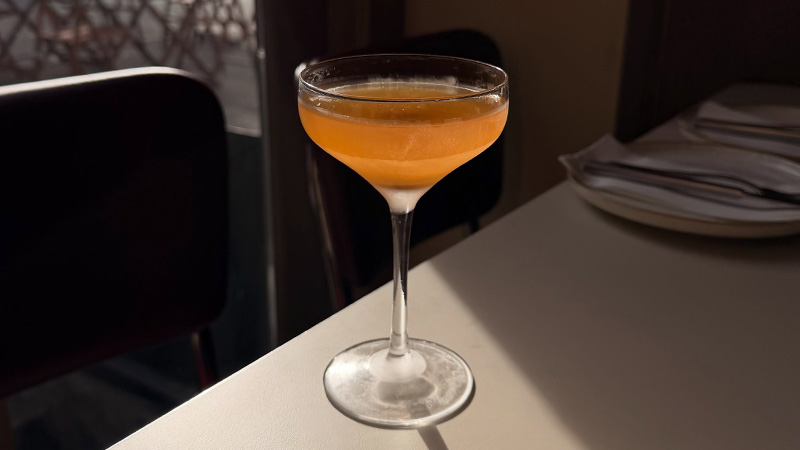
On appearance alone, many of today’s Appletinis bear no resemblance to the original cocktail. That’s intentional: Now on menus of buttoned-up, well-reviewed bars and restaurants, forgoing the neon color was all but necessary.
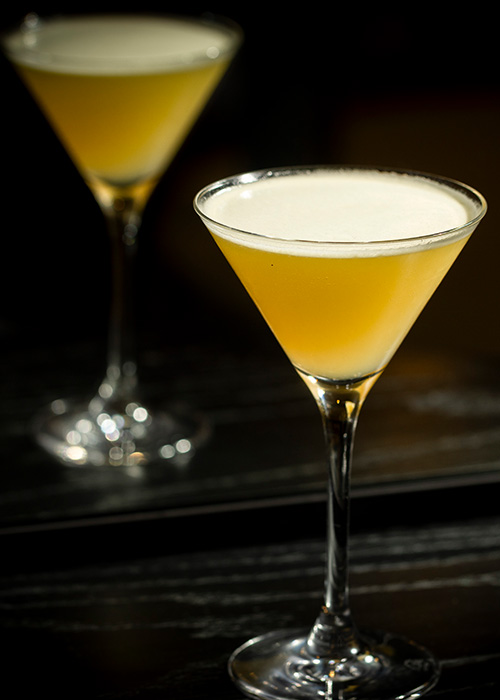
Such is the case at Midtown’s three-Michelin starred Le Bernardin, which recently debuted its very own Appletini riff — sans green coloring. After a number of guests came into the restaurant requesting Appletinis, head bartender Cary Goldberg developed a recipe that felt familiar in flavor profile, but fit the menu’s refined aesthetics. Instead of bright green, Goldberg designed a drink that’s more comparable to “the inside of a red apple,” that kind of rustic tan of oxidized orchard fruit flesh.
Titled La Grande Pomme — French for “The Big Apple” — the drink combines New York State-made ALB Vodka, barrel-aged Calvados, Berentzen Apple Liqueur, lemon juice, and a house made maple syrup infused with brown sugar and cinnamon sticks to bring about a cider-forward profile.
But not all Appletini fans are amenable to this new look. “When I first started making them here, I had one sent back because it wasn’t green,” Goldberg says.
Limo Bar similarly prioritizes authentic apple flavor and color, rather than trying to replicate the electric green look of the original.
“Ours is like a baked confectionery Appletini, with deep, molasses-like flavors,” Alexander says. “Something reminiscent of apple pie without being cloyingly sweet.”
Limo Bar’s The Big Apple-tini features apple cider, Pommeau, verjus, ginger spice bitters, lemon juice, and a cinnamon syrup and arrives at the table with a tan hue. “We wanted to take the recognizable flavor profile of apple pie or caramel apples and introduce it in a cocktail format that people would understand,” Alexander adds.
“People are starting to want approachable, sessionable drinks. They don’t want to be educated in order to enjoy a cocktail.”
But others stand by the drink’s true colors. Conor Johns, head bartender at Tavern Next Door, a cocktail bar adjacent to buzzy burger destination Red Hook Tavern, kept Midori in his Appletini when he first put it on the menu in May. His cocktail is, after all, named Adam’s Apple, a nod to the man who invented the original cocktail. But that doesn’t mean he is running back the most basic spec of the drink: Johns says the Midori is mostly a bridge for the rest of the ingredients.
His sophisticated take includes green apple eau-de-vie Pomme Verte, Chartreuse, Calvados, London Dry gin, and a Basque dry vermouth. The Adam’s Apple may maintain the appearance of the classic, but sipping the drink reveals layered flavors of orchard fruit with herbal, alpine nuances.
An Apple a Day…
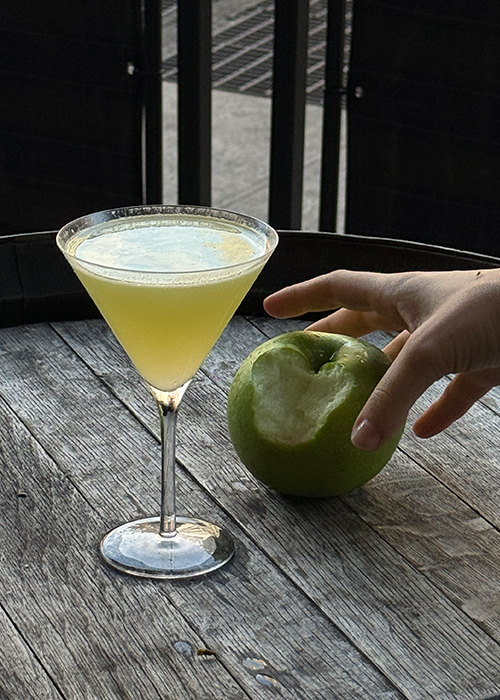
The modern Appletini’s shiny new suite of ingredients isn’t all about appearances: Bartenders are also set on introducing apple flavor through real fruit-based products, as opposed to the predecessor’s artificial flavoring. In the current Appletinis, you can find the fruit in nearly every shape and form — from apple juice and cider to apple butter and cordials.
At Dean’s, Delany rotates the cocktail menu seasonally. Entering autumn, she wanted to use fresh green apple juice in one of her drinks, and with its bracing acidity and pastel green color, her mind instantly went to the Appletini. Her cocktail also includes a liqueur made from quince, a less common orchard fruit somewhere between a pear and an apple, and a house made spiced syrup kicks up the flavor.
“The quince liqueur and a bit of the Laird’s apple brandy ground the cocktail into slightly rounder notes of the orchard fruit,” she says.
At different locations, real apples come through in other forms. Limo Bar uses a cider, The View prepares a homemade cordial, and Recente in the East Village cooks down green apples into a spiced syrup.
Small-Batch Liqueurs at the Core
As a drink of the ’90s, the original Appletini joined the scene before the modern cocktail renaissance championed the merits of fresh ingredients and artisanal spirits. But this time around, bartenders are looking beyond flavored schnapps, often calling on boutique brands for that distinct apple flavor.
At Frenzie in Brooklyn’s Cobble Hill neighborhood, the thought of offering a spin on the cocktail only came to head bartender Charlie Szur during a tasting of the apple liqueurs from Neversink Spirits, a small-batch distillery located in New York’s Hudson Valley. The spirits’ pure expression of the fruit inspired him to design a cocktail that celebrates those crisp, fresh flavors.
“I was really excited to try to play with them to turn the idea of this nostalgic Appletini into an excellent cocktail, with a lot of respect to the ingredients that are true to the flavor of a nice apple,” he says.
Similar to Le Bernardin’s take on the drink, Frenzie’s Appletini leans into a red apple look with the Hudson Valley’s Neversink Apple Apéritif, sherry, Martinelli’s apple juice, and vodka.
At Recente, managing partner Lukas Canan credits the bursting orchard fruit flavor of his version of the cocktail to two spirits: Neversink’s apple apéritif and G.E. Massenez Liqueur de Pomme Verte. Tavern Next Door and Greenpoint’s Bar Americano both also employ Pomme Verte in their Appletinis.
As a result, the cocktail walks the line between warm apple pie spice and that snapping bite of a fresh Granny Smith. Joined by a Pornstar Martini and a Strawberry Vesper, Recente’s Appletini is part of the menu’s “Discotecas” portion, which managing partner Lukas Canan refers to as the section dedicated to “‘Sex and the City’ cocktails” with “modern ingredients.”
“As old drinks are coming back, we have this new mix of producers in the States and in Europe making beautiful liqueurs and apéritifs,” Canan says. “We’re blending those two categories together, and consumers are really digging it.”
