Though controversial to some, West Coast IPAs are the perfect style for people who prefer burly brews. Originated in California in the 1980s, long before the craft beer movement existed, the style pushes the influence of American hop varieties like Centennial, Cascade, and Chinook (a.k.a. C hops) to the forefront. Brewers typically initiate this thrust through a technique called “dry hopping,” where they add extra hops during the brewing procedure. This extra oomph results in a beer buoyed by bold aromatics, intense flavor notes of evergreen and citrus, and aggressive bitterness.
To uninitiated imbibers still exploring the IPA’s categorical breadth, a West Coast IPA’s amplified bitterness may potentially come across as a threat. But here’s the thing: The bitterness in a good West Coast IPA doesn’t reduce the beer to the equivalent of licking a copper penny. It uplifts the hops’ fruity, piney characteristics, which can actually make the beers surprisingly refreshing. Not necessarily sessionable — remember, they’re still burly — but refreshing nonetheless.
Because West Coast IPAs can be a bit punchy in their flavors, it’s best to ease into the category with a few trusted producers. With that in mind, we selected eight breweries that can provide a solid entry point. Most of these beers are readily available nationwide, although there are a couple that distribute regionally. Regardless, they’re worthy of a purchase when they’re found out in the wild.
Stone Brewing Co.
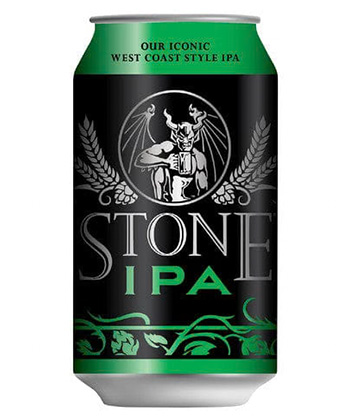
Stone’s impact on the craft beer scene is indisputable. Founded in the San Diego suburb of San Marcos, the brewery is hugely responsible for turning Southern California, and San Diego specifically, into a major player in American beer production. While they’ve garnered recent headlines for being bought by other brewing companies, they’ve maintained a steady, loyal fanbase throughout their three decades of existence. Stone IPA is their take on West Coast IPA; while the name doesn’t suggest the style, the flavor does, and then some. Expect pointed barbs of tropical and pine notes on both the nose and palate. A nuanced malt essence reins these flavors in to give the brew its signature balance.
Lagunitas
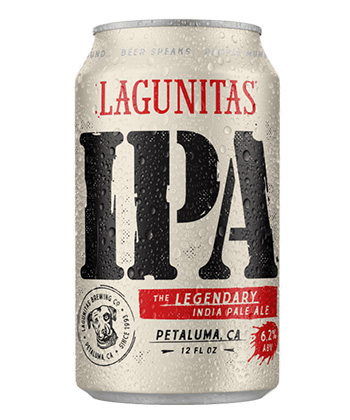
Lagunitas could very well provide the easiest entry point into the West Coast IPA category. Beer behemoth Heineken assumed full ownership of the Petaluma, Calif., craft brewery in 2017, and expanded the brewery’s distribution dramatically over the past decade. Like Stone, their take on the West Coast IPA, Lagunitas IPA, is both eponymous and unadvertised. Yet all the hallmarks of the style are present, from the use of C hops to the pronounced pine and citrus notes. The style also helps build some of the brewery’s experimental and special collaborative brews like The Trooper, a 6.6 percent-ABV West Coast IPA made in partnership with legendary metal band Iron Maiden that’s slated to hit the market in early June.
Russian River Brewing Company
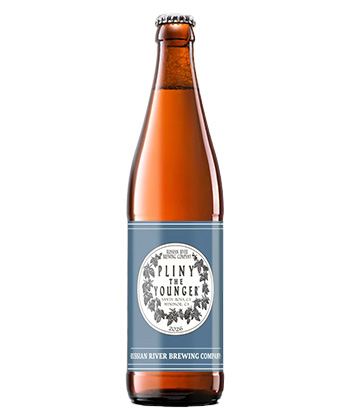
In a way, Russian River Brewing Company became equally famous for the lines it generated as the beer it created. Every late winter and early spring, the Santa Rosa, Calif., brewery releases its hyper-limited Pliny the Younger Triple IPA expression, and hopheads wait for upwards of six hours for the chance to taste it. It’s a spectacle. The brewery also produces the Mosaic Stack IPA, a lighter, easy-drinking iteration of the West Coast IPA style, as well as the Blind Pig IPA, which delivers a more traditionally sharp take. These don’t typically require spending half the day hanging out on a lawn chair in a parking lot to access, although there may still be a degree of difficulty involved — they’re mostly distributed on the West Coast, and they tend to fly off the shelves quickly. But they are each well worth the effort.
Sierra Nevada
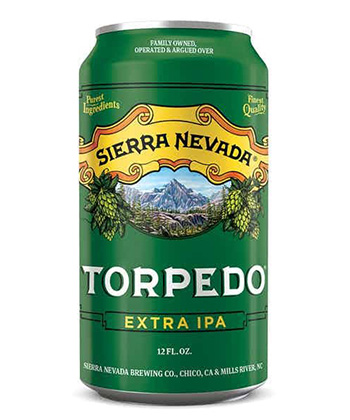
Launched in 1980 in Chico, Calif., Sierra Nevada has been around for so long and so ubiquitous in its availability, it may be easy to forget it’s a family-owned craft brewery. It may also be just as easy to forget that its version of the West Coast IPA, Torpedo, fits the category rather perfectly. Part of this is branding: The brewery refers to Torpedo as an “Extra IPA.” The beer’s explosion of mighty citrus, pine, and tropical aromas and flavors will let you know exactly what style you’re drinking. The bones of this style also help form the structure of its Atomic Torpedo brew, an Imperial IPA combining the West Coast hops the brewery uses for its West Coast IPA with the East Coast hops used in its juicy IPA expression, Juicy Little Thing. The result is powerful in flavor, not to mention potency — it checks in at a whopping 9.2 percent ABV.
Bear Republic
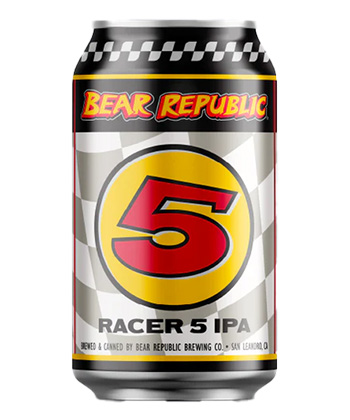
Mention Bear Republic to a California craft beer aficionado, and Racer 5 IPA will more often than not come up within seconds. The West Coast IPA produced by this brewery founded in Sonoma, Calif., was the Golden State’s definitive version of the style in the mid ’00s. One of the reasons may have been its Speed Racer-esque label, which made it look like a brew ready for action. It’s a bit of a throwback these days, as its punchy bitterness and full body lean into a brawnier profile that initially defined the category. It’s not the easiest brew to purchase, as it’s mostly available in California, but it’s worth picking up, if only to explore the category’s roots.
Firestone Walker
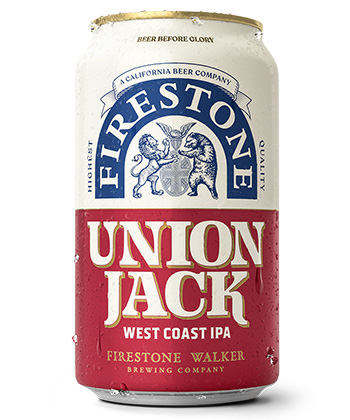
Long before it was in a position to acquire Stone Brewing in April 2026 (with the help of its Belgian majority owner Duvel Moortgat Brewery), this Paso Robles, Calif., brewery was creating waves with its wide range of brews adorned in vaguely British packaging. Its West Coast IPA, Union Jack, does not contain such outer ambiguity, since each bottle rocks the U.K.’s national flag. While this provides a big tip of the hat to its British-born co-founder, David Walker, it’s designed to be the “anti-British beer,” according to its website. Union Jack’s evergreen, grapefruit-forward flavor profile is a far cry from the Old World’s traditionally malt-forward sensibilities. Judging by the scores of awards Union Jack has won since it launched in 2008, this deviance is clearly a good thing.
Ballast Point
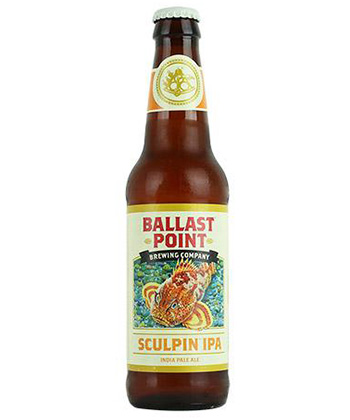
Founded in San Diego in 1996, Ballast Point was one of the seminal breweries to put Southern California on the national beer map. The brewery’s haphazard acquisition history has also arguably made it somewhat of a cautionary symbol of the beer industry’s ongoing struggles. Yet throughout its twists and turns, Ballast Point’s flagship brew, Sculpin IPA, has remained one of the scene’s most dependable, approachable West Coast IPAs. It’s a little fruitier than other examples, with summery notes of mango and peach popping through the bitterness. However, these notes can make it a great choice for novices just getting into the style. While Sculpin and other Ballast Point brews aren’t as easy to find as they were back in their heyday, they are still worth seeking out.
Oskar Blues Brewery
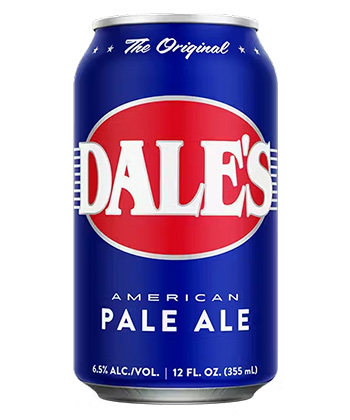
Craft beer has been around long enough to have its own historic timeline, and Oskar Blues played a vital role in building that lore. In 2002, the Lyons, Colo.-based brewery became the first craft brewery to can its beers. This initially caused beer snobs to freak out, but such worry proved to be unwarranted over time. This tidbit alone makes grabbing a can of Dale’s Pale Ale, its West Coast IPA-style brew, a worthy move. It’s also a great call because of the brewery’s old-school approach to producing the beer. Anchored by a sharp citrus and piney flavor profile, this is an unapologetically classic version of the style.
