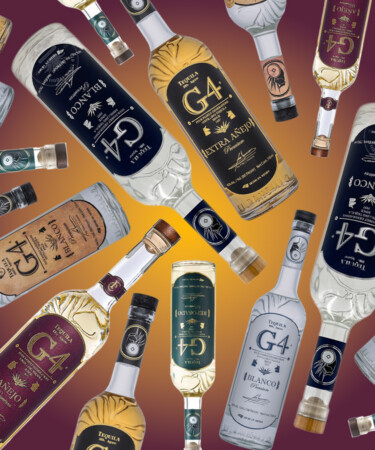
Made with a commitment to both honoring tradition and embracing innovation, G4 Tequila is the latest brand to win over the bar industry amid the artisanal tequila renaissance.
With deep family roots in the industry, Felipe Camarena founded the distillery that houses G4’s production in 2007 before its official opening in 2011. The brand didn’t reach shelves in the United States until 2014, but in the past decade, it’s become one of the foremost choices among bar pros and tequila enthusiasts.
G4 aims to honor the history and tradition of tequila while ushering the spirit into the new age, converging old-school ingredients and techniques with new-school technology. From the meaning behind the name to the brand’s meticulous production methods, here are seven things to know about G4 Tequila.
-
The name refers to Camarena’s family lineage.
Felipe Camarena is the great-grandson of Don Pedro Camarena, a legendary tequilero often credited with being among the first to bring Blue Weber agave to the highlands in the 19th century. The family has continued in the business over the years, making Felipe Camarena the fourth generation to work in the tequila industry, inspiring the name “G4.”
Don Pedro built the Camarena family’s first distillery in Los Altos, before it crumbled upon the onset of the Mexican Revolution in 1910. Don Pedro’s son, also named Felipe, opened the family’s second distillery, La Alteña, which is now home to brands like Tapatio and Tequila Ocho. Felipe used to work at La Alteña, but left in 2007 to construct his own distillery, El Pandillo.
-
You’ll be drinking rainwater — sort of.
G4 — and all brands produced at El Pandillo, for that matter — sources both spring water and rainwater to make its tequila. The brand’s blanco expression uses a half-and-half split between the two water types, which its website says helps create “an authentic, beyond-organic experience.” Other accounts agree and call it the “secret” to its greatness, saying the rainwater imparts a “wet-stone minerality” to the spirit. El Pandillo retrieves rainwater through a capturing system built on the distillery’s roof, funneling it into a 200,000-liter underground tank.
-
The master distiller invented a custom agave-crushing machine.
Camarena studied engineering and used his gadget-building side to invent an agave crusher. Named Felipestein as a nod to “Frankenstein,” the machine is 19,000-pounds, built entirely from recycled parts of a railroad car, steamroller, and other industrial materials. Felipestein, studded with spikes, rolls along rail tracks, crushing cooked agave along the way. Camarena has found that this unique method presses the plant’s juices without tearing its fibers.
-
G4 uses an ancestral yeast strain.
Camarena dials into his family’s tequila-making legacy even further by using a strain of agave yeast preserved from his grandfather, Don Felipe, who opened La Alteña in 1937. Don Felipe passed down the yeast for generations, helping preserve the Camarena family’s identity in its tequilas.
-
The brand has a proprietary tequila certification course.
G4 collaborated with the International Tequila Academy to form its own training curriculum for tequila-interested consumers. Retailers, bartenders, or aficionados who simply want to learn more about the brand, its history, and process, can follow the online course. The curriculum covers tequila production, G4’s products, and the ins and outs of the spirits market.
-
G4’s site features the one surviving piece of the Camarena family’s original distillery.
Little remains of Don Pedro Camarena’s original distillery that burned down during the Mexican Revolution. One of its remnants is the volcanic stone tahona that was used at the Los Altos location — it was the tool the family used to make its first-ever batch of tequila. The tahona is now on display at El Pandillo.
-
The brand is expanding — and adding new products.
Given its smashing popularity in recent years, G4 is scaling upward, and along with this growth came a new storage facility that neighbors El Pandillo. There, G4 is experimenting with different aging techniques and barrel types. For example, it recently announced that it will mature some of its tequila in lightly used Jack Daniel’s casks. It will also experiment with other vessels, including ex-Cognac, sherry, and wine barrels.
Recent G4 Reviews
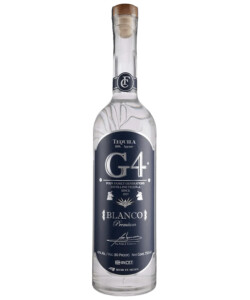
Money can't buy happiness, but spending around $50 will definitely unlock some of the highest-quality expressions of blanco tequila on the ...
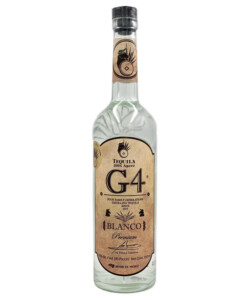
This stunning blanco tequila showcases a curious combination of using traditional techniques for modern drinking preferences. The "de ...

This reposado matures in former George Dickel Tennessee whiskey barrels and arrives full of funky, tropical fruit character. Hints of dried ...
