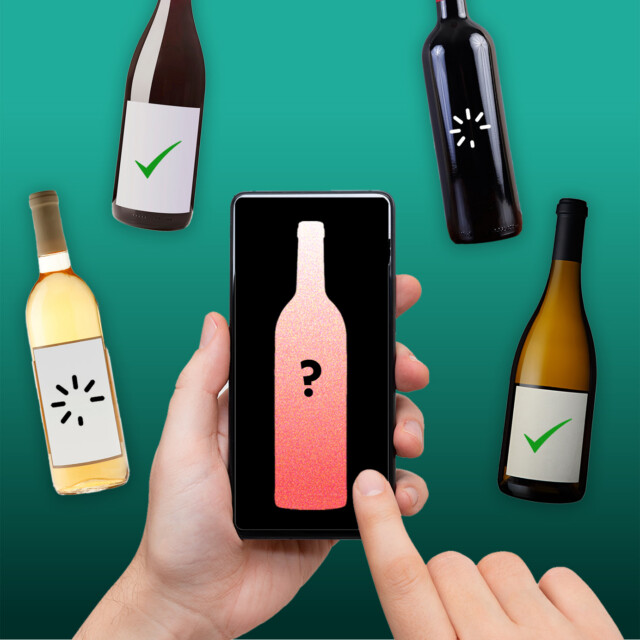
About a decade ago, publications were abuzz about two new apps that were taking the wine world by storm: Vivino and Delectable.
These were apps where users could take a photo of a bottle and find out everything about it: producer, region, vintage notes, average ratings, and price. Some reviews were filled with ratings by consumers, while others were a combination of everyday drinkers, wine aficionados, and, of course, sommeliers and critics.
This presented a shift. For better or worse, guests were no longer beholden to the sommelier to guide them through their wine journeys. Some people in the business even worried that it would be the end of sommeliers. It wasn’t. Not even close. If anything, it opened up the wine world.
AI is doing the same.
Now, instead of scanning a label or Google reviews, guests can open ChatGPT, Claude, or CellarTracker’s new AI app, CellarChat, and do the exact same thing. Same behavior, quicker response, more in-depth detail.
“Approaching a table over the last 10 years, you’d still approach and people would be looking up wine on their phone. And it wasn’t through AI. They were just doing it through something else,” says Amy Racine, beverage director and partner at John Fraser’s Restaurant Group. “So in my opinion, with the current state, the only thing that’s new is that they get it much faster and in more detail.”
What used to take a few minutes to search, cross-reference, or wait for a somm to come talk to you about, now happens in seconds, often before a wine professional has even hit the table.
The guest hasn’t changed their habits; they’re merely armed with more information at their fingertips. And yes, there are times when AI hallucinates. More often than not, though, the information is solid.
After Eric Asimov’s New York Times article, “A.I. Is Coming for the Sommeliers,” was published in March, I saw blogs, social media posts, and comments about how AI can never replace the somm: It can never decant a wine, it can’t read a table. And they are 100 percent right, it can’t.
But instead of espousing the human touch — which I and many people in this world treasure, especially in an increasingly artificially humanized digital world — I think it’s more prudent to discuss what the prospects are and how AI may actually help a struggling sector of the beverage world.
Wine’s Current Headwinds
The past few years have been a very rough ride for the wine industry. In 2025, global wine consumption was down nearly 3 percent, with consumption in the U.S., the largest wine market in the world, down over 4 percent.
We can blame a variety of causes: Boomers are aging out; tariffs are making it cost-prohibitive; wine has an identity problem; Millennials have found their inner health guru; and Gen Z… well, Gen Z just isn’t drinking wine. Even with as much work and effort as sommeliers and wine experts have put in, there is still an idea that ordering wine in restaurants is daunting and, at times, an anxiety-inducing experience.
At a recent convention in Las Vegas, the topic of wine service came up. I remember one person very reluctantly admitting that they didn’t like talking to somms because they felt intimidated by them. I mentioned that while there is always room for improvement, most floor somms these days are trained to make people feel comfortable. Her response was simple: “Well, my favorite two wines are Meiomi Pinot and Rombauer Chardonnay, and generally there’s a look, and then I’m embarrassed or ashamed of what I like. I’d rather just ask AI what on this list is like Meiomi than risk the judgment.”
“Small mom and pop shops might not have the capacity to pay someone with that level of experience. So a lot of times small business owners end up being the operators, and this is where AI is a tool that can help them.”
I would have written this off as a one-off, but five other people immediately mentioned feeling the same way, which means this type of interaction still happens, though in my opinion less and less so. But if a small slice of consumers feels this way, you can rest assured there are still far more out there opting out of the wine conversation completely.
Amy Racine adds:
“I don’t think they’re alone. I think part of the conversation is the reckoning of douchebag somms. This will put the final nail in the coffin because nobody wants to talk to those people and feel bad about themselves. I would rather talk to my AI bot that tells me exactly what I want.”
A recent San Francisco Chronicle article seconds this theory in asserting that guests’ use of AI “shows that the decades-long stigma against the sommelier prevails.” The image of the sommelier has maybe improved over the years, but there are still bad actors out there.
The Service Factor
When you look at some of the other choke points of service, one aspect that constantly comes up is time. Generally, outside of fine dining and a few places in major markets, there are not a ton of sommeliers working the floor. In many places there may be only one or, as is more often the case these days, none.
But you want to order a bottle. You don’t know the list and you have questions, but the one somm working the floor is dealing with two different tables, or more. It’s not unusual, despite what many wine folks will say, to wait 10, 15, or even 20 minutes to talk to someone. That’s 20 minutes where you could already have wine on your table. And when that bottle is done, you want another, but decide it will take too long and skip it entirely.
That delay isn’t just impacting the guest experience, it is directly impacting the revenue of the restaurant.
This is where AI could help. Maybe not with getting the bottle, but with deciding. Daniel Webber, wine director of Wrigley Mansion in Phoenix, thinks one possible solution for places with a shortage of somms could be simple: a barcode on the list that links to a PDF version. Guests could download it, run it through a chatbot, and state their preferences and price range.
Does it replace in-person knowledge and human touch? No. But it does offer a way for operators to provide a wider variety of wines beyond mass-market brands without having to hire expensive, singularly focused wine stewards. And yes, I understand that smart operators use floor somms beyond just wine, but there is still a cost. (For those who don’t know, labor is one of the biggest costs in a restaurant. So if you can save money and still offer something elevated, that’s a win.)
When it comes to operations, Webber believes it’s a game changer for time management:
“Where I find a lot of utility is if I’m creating staff training modules, PowerPoint presentations, anything where I need quick access to information. It’s kind of replaced Google in some capacity and exists at a level of operations now where you can get pretty solid information really rapidly, and I can translate that information more effectively, which buys me back time that I can then spend on the floor with guests.”
Also, creating a thoughtful wine list that isn’t just the usual suspects takes time and knowledge. There are a lot of places out there where the person choosing the wine is also the GM, the owner, the beverage director, and a pinch hitter almost everywhere else.
I’m probably going to get skewered for saying this, but what if there were a model that could assist in creating a more thoughtful wine list? Something that could assess the menu, the local demographics, as well as aggregate local distributors to advise on what wines might work in a particular venue at price points that actually sell?
That model can factor in menu, region, and neighboring restaurant wine offerings (so as not to have the same wines as everyone else).
People might think this is bullsh*t. But let’s peel back a layer. I’m not talking about some New York, Miami, or San Francisco restaurant that has both talent and access at its fingertips. I’m talking about a smaller operator who might not know anything about wine and might not have the capital or talent to hire someone to build a list, but still wants to offer something different.
“Approaching a table over the last 10 years, you’d still approach and people would be looking up wine on their phone. And it wasn’t through AI. They were just doing it through something else. So in my opinion, with the current state, the only thing that’s new is that they get it much faster and in more detail.”
They want to offer wines that aren’t the same 10 bottles in every other restaurant in their area. There are far more of these operators than there are wine-savvy, well-capitalized ones, and many just want to have a more diverse offering. They just want to stand apart from the pack.
“I think everyone’s in a position right now where they want to see wine sell,” Webber adds. “And I think small mom-and-pop shops might not have the capacity to pay someone with that level of experience. So a lot of times small business owners end up being the operators, and this is where AI is a tool that can help them.”
But even for the experienced wine buyer, a centralized AI purchasing system could be helpful. Webber sees a different stage of AI further down the road:
“An AI chatbot where you can compare and contrast against other wine lists and find pricing gaps, regionality gaps, and vintage gaps. You can fill holes and get information from local distributors without reading through stacks of paper to figure out what you want to buy. It just pitches it to you and you can decide yes or no.”
This could mean looking for pricing gaps. There is nothing worse than a list that has $40 to $50 entry wines, then quickly jumps to $100-plus bottles. It could mean identifying flavor profile omissions or redundancies, i.e., the 60-bottle wine list that has 20 Chardonnays, most in the same price point and all a similar flavor profile.
Here’s what I want: I want more wine to be sold. I want the younger generation to drink and try more wine. I love wine. There are so many reasons why I love it. But I also realize that times are changing, and everyone needs to adapt.
If we can use AI to augment the human touch, maybe we can build back wine consumption. Maybe AI can help demystify it just enough and give the shy person, the one afraid to say what they like, just enough confidence to try a new wine unprompted, and eventually feel comfortable enough to start a conversation with a sommelier.
The tools that are coming can help both the service side and the back-end-operations side. The more we embrace the tech — smartly, strategically — the better the wine world will be in the long run.
The industry will adapt. It has to, because for every wine professional who resists, there will be others who will find a way to utilize the tech to enhance the guest experience, support service teams, sell more bottles, and hopefully foster a connection between wine and the next generation of drinkers.
This story is a part of VP Pro, our free platform and newsletter for drinks industry professionals, covering wine, beer, liquor, and beyond. Sign up for VP Pro now!
