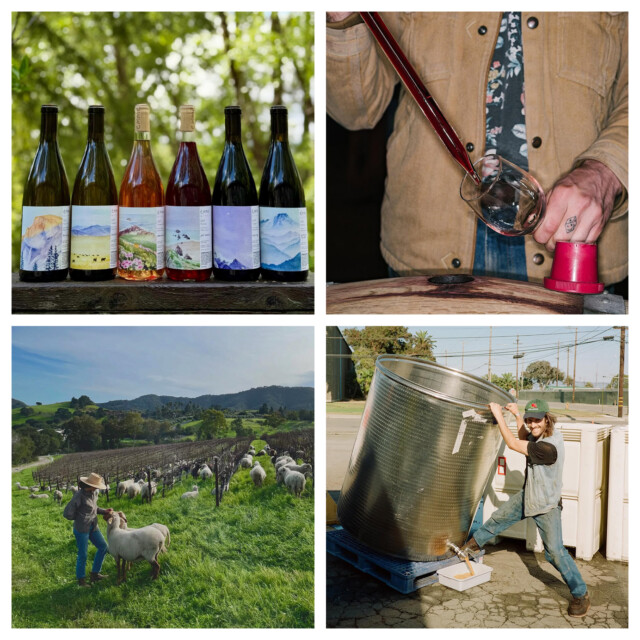
There’s a line in John Steinbeck’s “East of Eden” that seems to sum up our collective attitude toward the state of California winemaking today: “It never failed that during the dry years the people forgot about the rich years, and during the wet years they lost all memory of the dry years.”
While it’s no surprise that, over the nearly 300-year history of winemaking in California, it has had its own rich years — vintages of critical acclaim, recognition through events like the Judgement of Paris — and dry years –– periods of oversupply and bulk-wine glut. And yet we seem to have lost the thread on both ends. Not only have we forgotten what made California wines so celebrated in the first place, but we have also failed to reclaim our sense of pride and excitement for what winemaking in California could be.
Today, the image of California wine that most drinkers carry is ripe and heavily extracted, made with an emphasis on production and promotion, on scale and consistency. As Kae Whalen, wine director at Los Angeles’ Little Fish explains, “The monolith of overproduced, overwrought Chardonnay and Cabernet Sauvignon, the idea that there’s an inherently lower quality of wine than what you can find in Europe… it obscures what’s really special about winemaking in the state for many drinkers.”
What that generalization overlooks is that the qualities that first made California a world-class wine growing region haven’t disappeared. If anything, Napa and Sonoma’s ocean-influenced climate, biodiverse terroir, and mix of volcanic and alluvial soils remain as compelling as ever. “Wine made in California has only become more interesting, more diverse, with as much room for classicists as for the avant-garde,” Whalen adds.
Early advocates for lighter expressions of California wines have laid the groundwork for the next generation. In 2011, a small group of winemakers led by Raj Parr and Jasmine Hirsch, of Hirsch Vineyards, created the In Pursuit of Balance (IPOB) movement, which was founded on the belief that grapes like Pinot Noir and Chardonnay could shine in California when treated with the same nuance and finesse long associated with Burgundy.
Although the group officially disbanded in 2016, their legacy carries on through some of the state’s most exciting producers today. These winemakers aren’t necessarily inventing a new California so much as carrying forward an ethos that IPOB helped reinvigorate: wines that speak to the land and history from which they come, with less intervention in the cellar and a greater emphasis on farming, balance, and the quality of the fruit itself.
That philosophy, however, comes with its challenges. “Making wine in California, particularly within the natural wine world, is becoming increasingly difficult,” explains Tatiana Ettensberger, co-owner and beverage director of Wilde’s in L.A.’s Los Feliz neighborhood. Large Napa estates control so much of the land and fruit, and climate change continues to make conditions more and more impossible.” She has a deep reverence for the renegades who, despite these hurdles, remain optimistic about California’s future. “The commitment these winemakers have to working without [additives] is genuinely courageous, and deserves far more recognition than it receives.”
Even through some of the state’s “dry years,” the future of California winemaking looks incredibly rich. And sommeliers are taking note. Wine lists that once prioritized bottles from Europe are now finding ways to make room for both long-standing new wave wineries like Hirsch, Bedrock, and Arnot-Roberts as well as labels on the rise. So we asked sommeliers which new producers they’re most excited about right now. Here are the nine winemakers defining the next generation of California wine, listed in alphabetical order.
Dorsal Wines
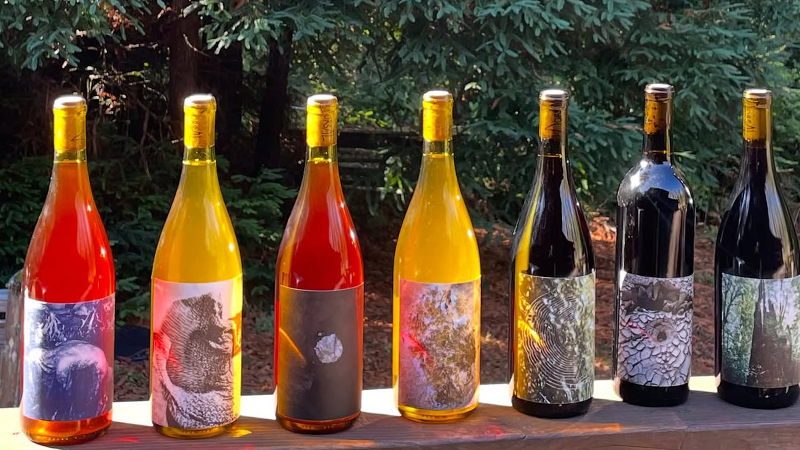
Dorsal Wines is the small project of Devin Alexander Myers and Jenna St. George, producing zero-additive wines along the Mendocino coast. After several years working with his mentor, Caleb Leisure, and fellow winemaker Pete Bloomberg in a shared cellar in Cloverdale, Myers relocated to the tiny hamlet of Elk Ridge in 2025, where he now makes wine out of a modest cellar just steps from his home. Meyer’s approach to winemaking is one Wilde’s Ettensberger deeply reveres. Working out of a refurbished redwood barn, Myers vinifies hand-harvested fruit from organically farmed, dry-farmed family vineyards scattered throughout the coastal valleys and ridges of Mendocino County. Myers favors short macerations, field blends, and co-ferments, typically bottling the wines young before allowing them to rest for an additional six to nine months prior to release, which varies each year. Its 2022 “Orb” — 100 percent foot trodden, whole cluster Grenache from the Sierra Foothills — is a shining example of what Dorsal does best — balancing fruit with reductive notes of flint and stone. Fermented without additives exclusively in stainless steel, the wines from Dorsal are equally esoteric as they are approachable, pushing against convention while remaining deeply tied to California’s unique history and terroir.
Emme Wines
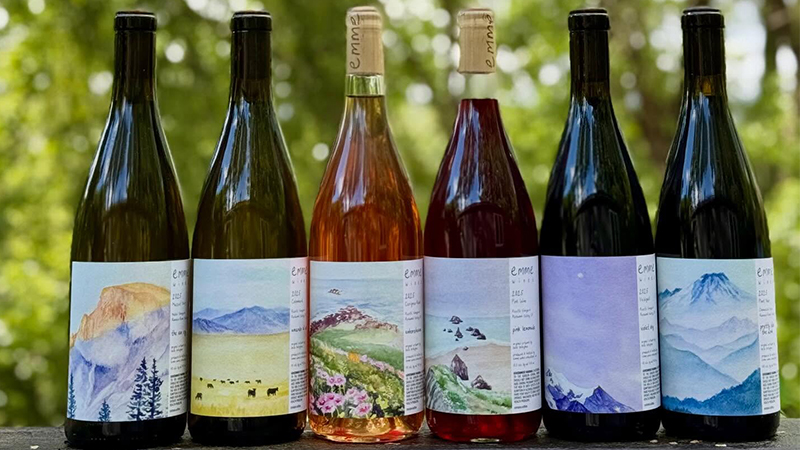
When Rosalind Reynolds started Emme Wines in 2018, she did so with an acute awareness and appreciation for the vast community of producers and people that came before her. Named for her grandmother, Rosalind pays homage to the past and paves way for a new future in everything she does. After spending some time abroad in France, she returned to her native California as the assistant winemaker to Pax Mahle of the legendary Pax Winery in Sonoma. In addition to her work with Pax, she started her own label focusing her efforts on grapes like Colombard, Carignan, and Zinfandel — all of which have deep roots in California’s winemaking history, but fly under the radar in the modern wine scene. “It’s an incredible project that showcases wines made with a lot of spirit and care,” Camille Lindsley, owner and sommelier of East Village restaurant HAGS, shares. “Rosalind is also sourcing from really cool sites throughout California. She is working with a lot of classic but not ubiquitous grapes and styles. — her ‘You’re Lucky You’re So Cute’ Zinfandel clocks in at a lean and bright 12 percent ABV! — that showcases a cool reverence for old school California tradition with a fresh approach.”
Lady of the Sunshine
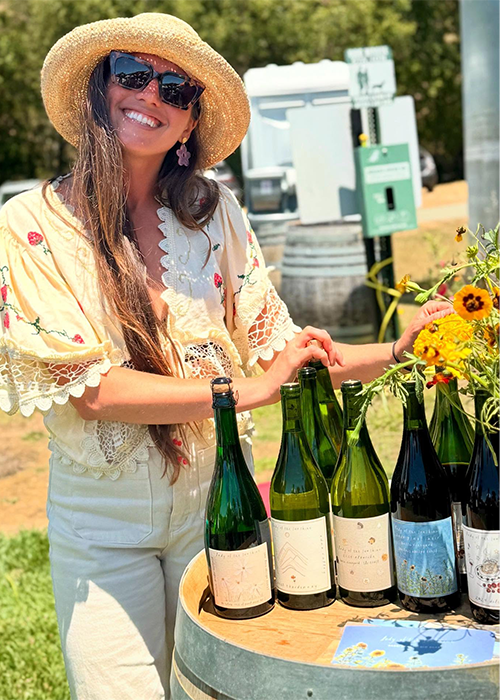
Gina Giugni, a second-generation biodynamic farmer based along the San Luis Obispo Coast, began Lady of the Sunshine in 2017 as a personal project out of deep reverence for the land she calls home. Starting out by leasing small vineyard plots, Gina and her husband, Mikey Giugni — winemaker behind partner wine brand Scar of the Sea — bought Bassi Vineyard, a 29-acre estate one mile from the ocean built on sandstone rich soils, in 2024 from California wine veteran Mike Sinor. They are in the process of converting the land to biodynamic certified farming, all the while continuing to work without pesticides in the fields or additives in the vineyard. Hannah Harrington, sommelier at Smithereens in NYC’s East Village notes, “Though she is a meticulous farmer, Gina’s wines are approachable and easy to love — the Edna Valley Pinot Noir has been a favorite of mine to sell recently.” Though the Scar of the Sea and Lady of the Sunshine wines have been industry favorites for a few years, the acquisition of this hallmark vineyard is a strong signal for the future of the growing SLO Coast AVA. And with this breezy, cool-climate approach, Giugni promises to be in a new class of winemakers challenging our conventional understanding of California white wines.
Llewelyn Wine
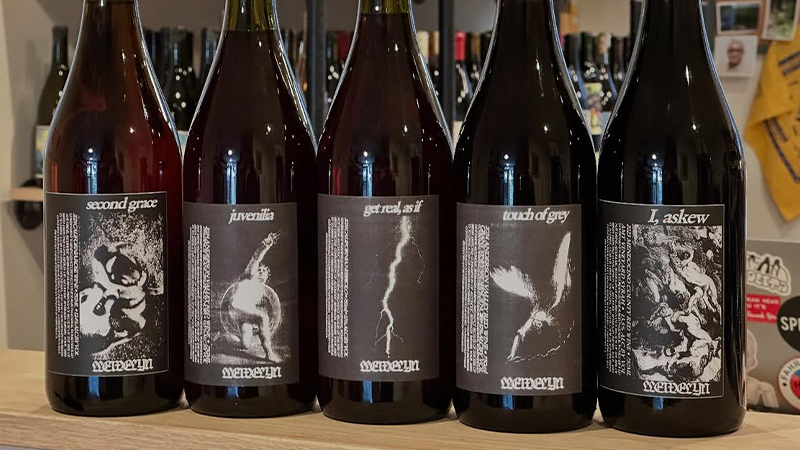
Pete Bloomberg, founder of Llewelyn Wine, is “a bit of a mad scientist,” according to Wilde’s Ettensberger. A somewhat elusive character, and very punk rock, Bloomberg founded Llewelyn as a one-man project in Cloverdale, Calif. in 2021. Tending to a few acres of Chardonnay in Sonoma himself, he sources the rest of his grapes from close friends and local organically farmed vineyards primarily in Mendocino. Where the range, scale and output of Llewelyn Wines varies — somewhat significantly — year to year, there are a few things Bloomberg never negotiates on, namely that his wines are never sulfured, fined, or filtered. Experimenting with style and blends, Llewelyn cuvées have included a semi-untopped Chardonnay, a rosé of old vine Carignan, and a solera style rosé. “His approach to wine has shown a perfect tension between exacting precision and a distinctly punk sensibility. Red-white blends that defy categorization, lean, coastal Pinots, long elevage Chardonnay that could be described as California’s answer to Burgundy all come to mind,” Whalen adds.
Madson Wines
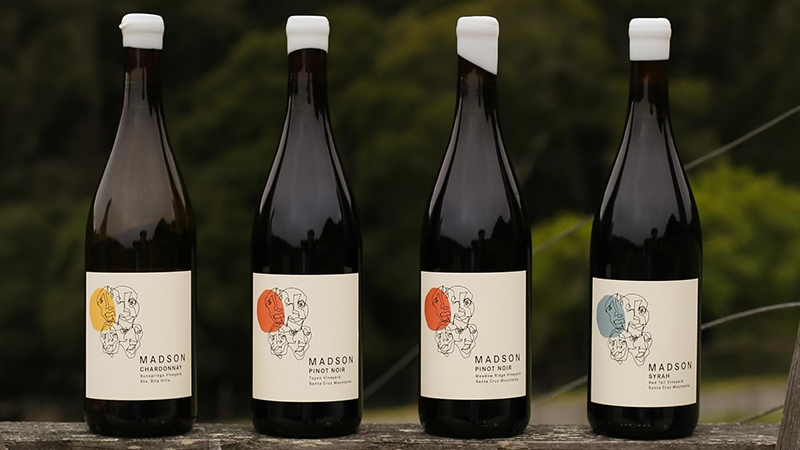
Before Cole Thomas was a winemaker, he was a California farmer with a deep love for the land on which he was raised. Beginning his career as an organic vegetable farmer, he later worked as an edible landscaper and manager of the Demeter Seed Library, before finding his way to viticulture while working for Jeff Emery of Santa Cruz Mountain Vineyard. The experience set him on a path toward winemaking, first in Australia and then in New Zealand, before returning to his native Santa Cruz to launch Madson Wines in 2018. Shaped by his background in agriculture and the low-intervention winemaking techniques he learned abroad, Thomas brings an earnestness and delicacy to his wines. Rafa García Febles, general manager of NYC’s acclaimed Kabawa and Bar Kabawa, enjoys recommending bottles from Madson to showcase how the Santa Cruz Mountains are capable of remarkably expressive, balanced wines. Madson focuses on refined, terroir-driven takes on Pinot Noir, Syrah, Chardonnay, Chenin, and beyond. And its single-vineyard Cabernet Sauvignon is a far cry from the overripe California Cabernets of yesteryear — tannic yet smooth, with notes of black pepper, oregano, moss, and warm spice balanced by the tartness of blackberry and plum.
Marioni Wines
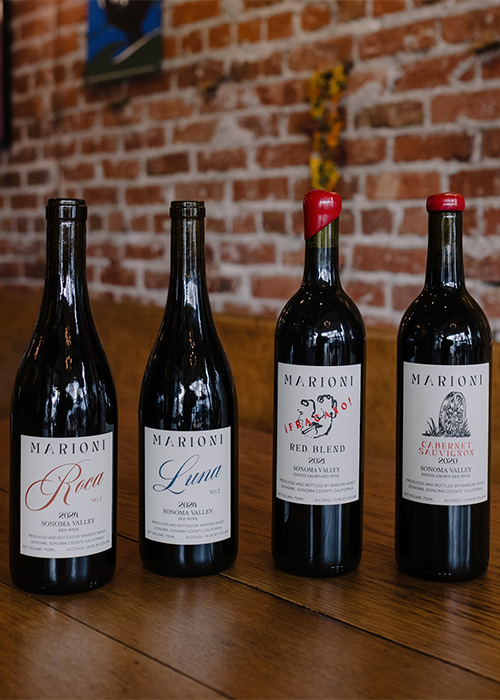
Dan Marioni is a fifth generation winemaker with deep roots in Sonoma’s winemaking history. His goal: to preserve this tradition by bringing vineyard sites across the region back to nature in order to make the best, most honest wines. “Dan is truly Sonoma’s son, born, raised, and dedicated to California’s classic expressions of Chardonnay, Pinot Noir, and the rest, but with a reverence for a more radical process of getting there,” Whalen shares.
Getting his start with Nic Coturri, son of Tony Coturri who is largely credited with leading California’s natural wine renaissance in the 1970s, Marioni launched his own project in 2019, guided by the Coturri ethos: nothing added or taken. In fact, Whalen particularly loves his ‘Fracaso’ cuvée from 2021, an homage to the last wine he made at the Coturri estate made with a classic California blend of Merlot, Cabernet Sauvignon, and Zinfandel. Today Marioni harvests nearly five acres of vines from small plots scattered across the Sonoma Coast. There is artistry in every detail of Marioni’s wines. The labels are hand-made through linocut prints that Marioni makes with his wife Jessie, a tattoo artist in the region.
R. O’Neill Latta Wines
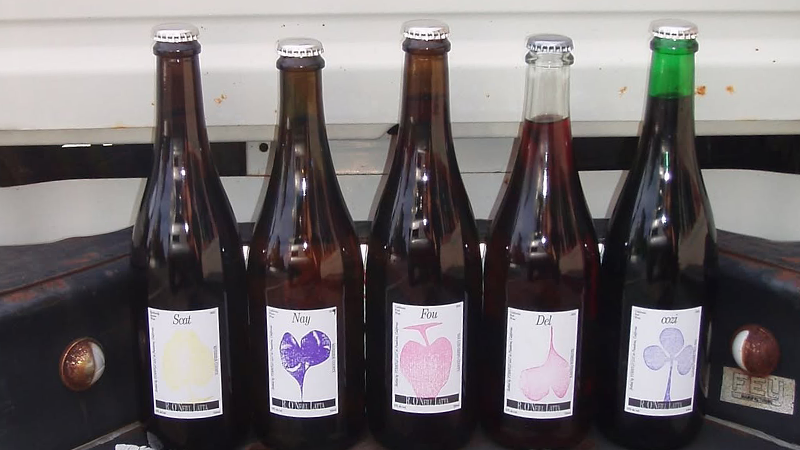
Without any background in wine to speak of, Riley O’Neill Latta started making wine in 2019. A Malibu native, Latta was drawn back to southern California during the pandemic after having graduated from NYU and living in New York as an artist. Back in L.A., he found himself drawn to the abandoned vineyards scattered near the beaches where he had grown up surfing. Once home to a thriving wine industry, vineyards in L.A. began gradually disappearing during the late 19th century through the mid-20th, first as Pierce’s Disease devastated vineyards and later as Prohibition and rapid urbanization transformed the city into what it is today. Determined to revitalize pieces of this forgotten land, Latta has spent the past several years farming vineyards close to home.
“Riley has spent the last few years focused on farming vineyards closer to home in L.A., including a few years in Anza and, more recently, vines in Malibu directly across the Pacific Coast Highway,” Whalen says. Though Latta is based in L.A., he works with fruit from as far north as Mendocino and as far south as his hometown of Malibu. Working under Jeff Emery, an old-school Pinot Noir producer in the region, and assisting Brent Mayeaux of Stagiaire Wine in his vineyard, Latta is still coming into his own style — in both wine and cider production. But as the identity of contemporary L.A. wines has yet to be defined, Latta’s patient, experimental style of low-intervention winemaking is sure to leave its mark.
Stagiaire Wine
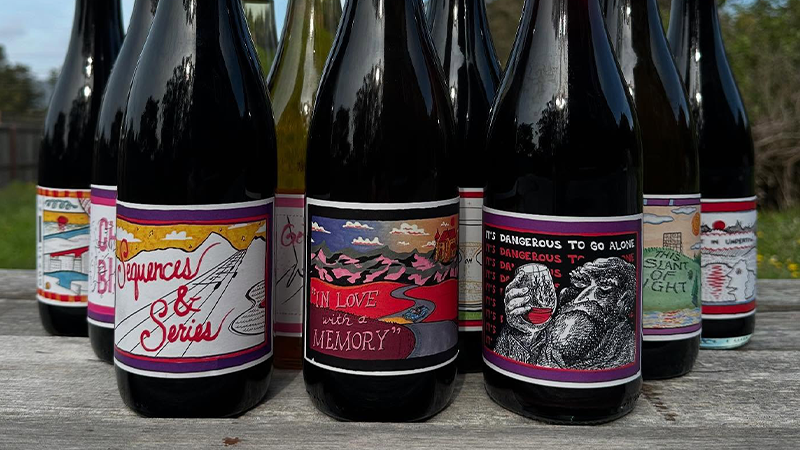
Stagiaire Wine is the project of New Orleans native Brent Mayeaux, named for his time as an apprentice at wineries around the world. Mayeaux began working with more conventionally minded producers in California, but experiences in Australia and France introduced him to natural winemaking through figures like Philippe Bornard in the Jura and Gareth Belton in the Adelaide Hills. In 2018, Mayeaux returned to California with a more French sensibility toward winemaking. It wasn’t until 2021, however, when he shifted his focus to sourcing grapes from high-quality sites, that he truly came into his own.
Today, he makes wine in a former industrial space on Treasure Island, a reclaimed island in the middle of San Francisco Bay — an apt symbol of his idiosyncratic path and distinctive style. Haran McElroy, sommelier at Smithereens, tasted with Mayeaux last year and immediately took note. “Trained in the Jura, based in the Bay Area, Brent Mayeaux a.k.a. Stagiaire makes some of the most sound and joyous wines I’ve had in recent years,” he says. “Working with grapes from high elevation locales in the Santa Cruz mountains, his minimal touch in the cellar on wines like ‘This Slant of Light’ and ‘Sufficiently Whelming’ delivers a new expression of California whites… reaffirming that he’s a winemaker to watch out for in the modern game.”
Scythian Wine Co./Brij Wines/Phelan Farms
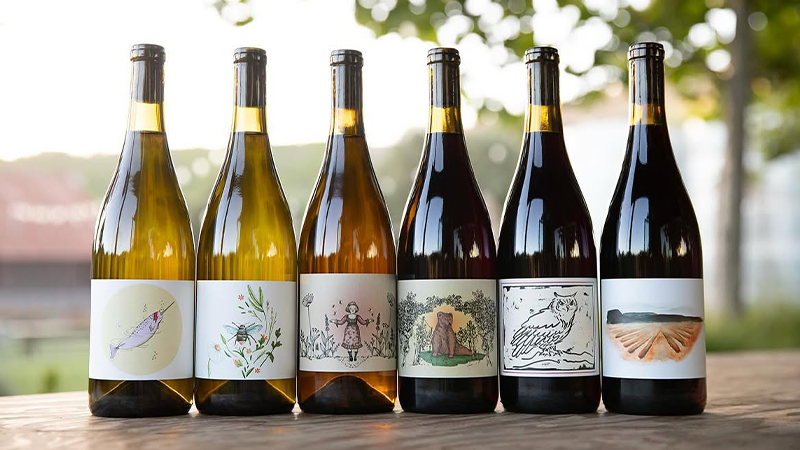
There is scarcely a corner of the wine world that Rajat Parr hasn’t mastered. Over the course of his decades-long career, Parr established himself as one of America’s most influential sommeliers, overseeing the wine programs for Michael Mina’s more than 30 restaurants, co-founding San Francisco’s acclaimed RN74, authoring several award-winning books, and helping lead the natural wine movement worldwide. All this before he became one of the most influential winemakers in California today. In his early years as a founding partner and winemaker at Evening Land Vineyards, Sandhi, and Domaine de la Côte, Parr helped drinkers redefine California Chardonnay and Pinot Noir.
Recently, he has turned his attention to organic farming on California’s Central Coast, particularly the cool-climate region of Cambria — which was previously essentially untouched by the wine world. Drawing on decades of travel, friendships, and deep wine knowledge, he has introduced extraordinary diversity of grape varieties to the region, including Pink Chardonnay, Trousseau Noir, Savagnin, Jacquère, Gringet, Altesse, Mondeuse, Poulsard, Mencía, alongside the more familiar Chardonnay and Pinot Noir. Over the past decade, Parr has launched Phelan Farm — one of California’s most celebrated new domaines — as well as Brij Wines, which sources organically farmed fruit from the San Luis Obispo Coast, and Scythian Wine Co., focused on the Cucamonga Valley.
Grossman-Weir fell in love with the new guard of California winemakers while working harvest with Raj Parr in Cambria a few years ago. “There is such a community out there of small wineries supporting each other and collaborating to make fresh, carefully made, tiny-production wines.” A gigantic figure in the wine world, Parr’s wines still retain an intimacy and artistry about them that reflects his deep reverence for both the land and its fruit. Though not new to the wine world in any sense, these projects are continuing to push the next generation of California wine into new territories.
