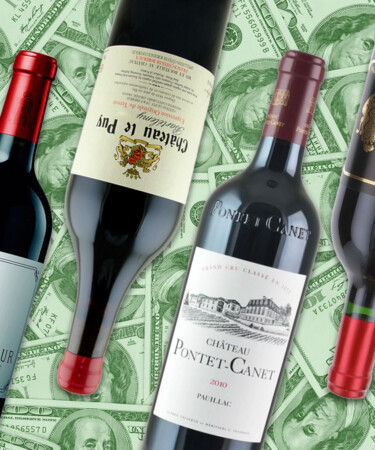
Unlike Burgundy, where most of the region’s output is price prohibitive, Bordeaux boasts a vast number of approachable bottles with many falling within the $15 to $30 range. That said, some occasions call for a bank-breaking bottle, and Bordeaux is also well-equipped with expressions that come with three- and four-digit price tags.
Bordeaux’s expensive bottles are highly valued for a number of reasons. They come from one of the most lauded winemaking regions in the world, and the “Bordeaux” name alone can bring up a bottle’s cost. The area’s Cabernet Sauvignon– and Merlot-dominant blends bring a fruit-forward flavor with a luxurious, velvety mouthfeel. And lastly, the region’s chateaus are also demarcated by centuries-old classification systems, and prices can rise even further depending on a given estate’s ranking.
It can be tough for the everyday consumer to see past Bordeaux’s brand value and the region’s arguably obsolete distinctions. So, we asked sommeliers for the high-priced Bordeaux bottles that are worth every penny. Some responses are the most expensive bottles somms have ever tasted, and others are among the costliest wines in the world, but if you’ve got money burning a hole in your pocket, these bottles won’t let you down.
The expensive Bordeaux wines worth the splurge, according to sommeliers:
- Château Palmer
- Château Trotte Vieille
- Château Haut-Brion
- Château Lafleur
- Château Margaux
- Château Ducru-Beaucaillou
- Château Cos d’Estournel
- Château Lafleur Les Pensées de Lafleur
- Château Le Puy ‘Barthélemy’ 2022
- Château La Mission Haut-Brion
- Château d’Yquem
- Château Pontet-Canet
- Château Cheval Blanc
- Château Latour
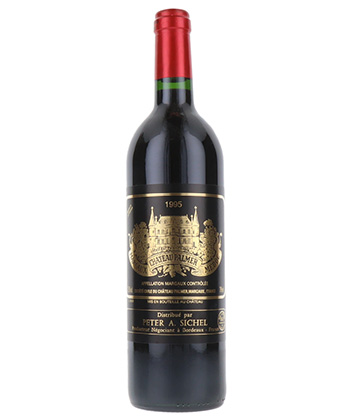
“For me, it’s Château Palmer. Bordeaux is full of technically great wines, but Palmer is one of the few that consistently feel emotional. Widely considered a ‘Super Second’ despite its third-growth classification, it combines the structure and longevity of a top château with an almost Burgundian perfume of violets, graphite, black tea, and dark fruit that makes it instantly recognizable in the glass. The best bottles remind you that great Bordeaux isn’t just impressive — it’s memorable.” —Scott Woltz, beverage director, Bibliotheque, New York City
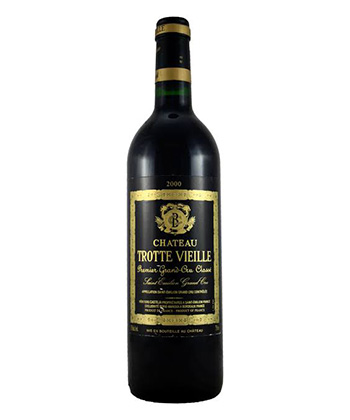
“I love Château Trotte Vieille — a Right Bank blend. Its high-toned aromatics are driven by the high proportion of Cabernet Franc with classic tobacco and floral notes, but the Merlot comes in on the palate with a round, plummy, sanguine finish. There are 1,000 pre-phylloxera Cabernet Franc vines on this property — some of which are sprinkled into the main cuvée bottling. This wine isn’t first-growth pricey, and the main cuvée retails for around $100.
But if you force me to splurge on a first growth, it’d be Haut-Brion by far. To me, it stands apart from the other first growths in its rusticity and unpolished-ness. It unapologetically is less seamless than the other four châteaus with the distinction. Though Merlot-driven blends are usually soft, the wine is angular and driven by the coarse minerality that is signature to the wines of Pessac-Leognan.” —Julie Dalton, wine director and master sommelier, Stella’s Wine Bar at The Post Oak Hotel, Houston
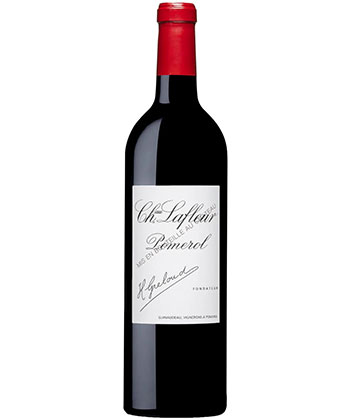
“If I’m splurging on Bordeaux, nine times out of 10, it’s Château Lafleur. Yes, it’s coveted and expensive, but despite its reputation and price tag, it remains a tiny, family-run estate with the Guinaudeau family overseeing the farming of every hectare with incredible care and precision. The wine has this remarkable combination of power, elegance, and longevity that never feels forced. Every bottle is a reminder that great wines are made in the vineyard, not in the conference room. It’s certainly expensive, but among Bordeaux’s true icons, Lafleur has always felt like one of the better, more thoughtful values because you’re paying for extraordinary farming and craftsmanship, not just the name on the label and its PR budget.” —Cody Pruitt, co-owner, Capitaine and Chateau Royale, NYC
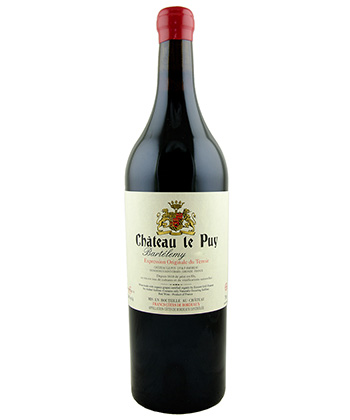
“Château Le Puy ‘Barthélemy’ 2022, all the way. I’m sure you’ll get more expensive responses, but if the question is whether this wine is worth the price, the answer is a dramatic ‘duh.’ The Amoreau family has been making wine at Le Puy for 14 generations, so ‘Barthélemy’ doesn’t feel like one winemaker’s clever idea of Bordeaux; it feels like a centuries-deep brain trust of notebooks, instincts, inherited questions, and notes passed down to future winemakers in the family, including those from Barthélemy himself, who was already questioning the use of sulfur in vinification back in the 1800s. It comes from the Les Rocs plot, is made by natural infusion, aged in used barrels, and bottled without filtration, but none of it feels like a wink at the current market. It just feels like a family slowly refining its language over centuries. It has all the seriousness people want from Bordeaux, but none of the boardroom energy, and if you can ever get your hands on older vintages, do it.” —Drew Brady, wine director, Long Count, NYC
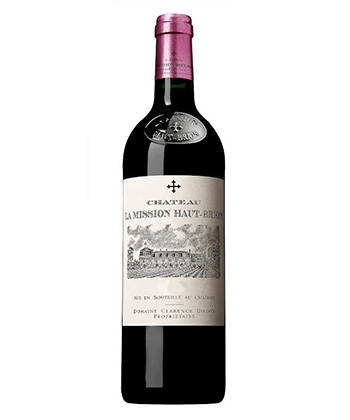
“For me, the splurge is always La Mission Haut-Brion. It sits just across the road from its famous first-growth neighbor, and the smoky, gravelly character of the Graves subregion tastes like nowhere else. The estate takes its name from the Lazarist mission priests who tended these vines back in the 1600s, and since 1983 it’s been farmed by the very same team behind Château Haut-Brion itself. So, you’re getting first-growth hands and first-growth terroir without paying for the name on the label next door. It’s a wine with a story and a soul, and in many vintages, it’s the better wine.” —Elizabeth Dames, co-founder and wine director, The Perlant, Atlanta
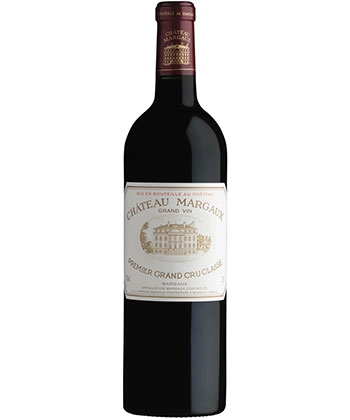
“If I’m really splurging on Bordeaux, I tend to gravitate toward Château Margaux or Haut-Brion, ideally from an impeccable source and in pristine condition. But there are so many ‘Super Seconds’ that can be every bit as satisfying, particularly Château Ducru-Beaucaillou in Saint-Julien and Château Cos d’Estournel in Saint-Estèphe. Vintage matters enormously in Bordeaux, but in the right years, these wines deliver the savory complexity, nuance, and ability to evolve that make great Bordeaux worth the splurge.” —Hannah Williams, head of East Coast sales, Thatcher’s Wine & Thatcher’s Imports, NYC
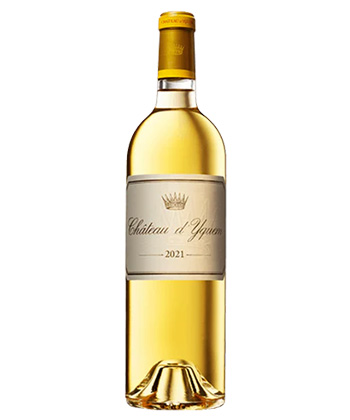
“When considering which expensive Bordeaux is truly worth the splurge, my mind immediately goes to the Château d’Yquem. While this is not a red Bordeaux wine, it is the Bordeaux dessert wine, and it’s worth buying that rare bottle you’ve been contemplating, especially if you plan to share it with friends. This golden nectar of a dessert wine has been produced for the last 300 years, and although I haven’t tasted all 300 vintages, I have never been disappointed with those I’ve had the pleasure of enjoying.” —William Jones, chief operating officer and wine director, Deep Roots Restaurant Group, Fairhope, Ala.
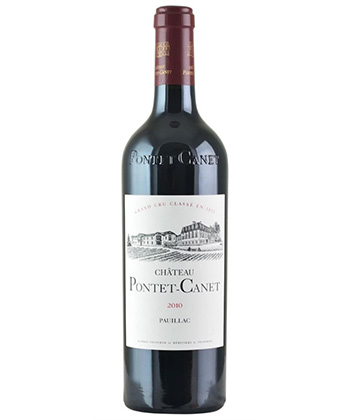
“I’m especially enthusiastic about Château Pontet-Canet, a fifth growth that would undoubtedly be upgraded to a second or perhaps even a first growth if there were a reclassification. The Tesseron family are leaders in both viticulture and winemaking and are at the forefront in Bordeaux with biodynamic farming, the use of amphorae, and other forward-thinking techniques. The results are in the glass — regardless of the vintage, there’s a purity of fruit, impeccably balanced structure, and barely perceptible oak influence. I just tasted the 2021, and it reflected these attributes beautifully. And value-wise, Pontet-Canet undercuts many of its quality peers. You’re never taking a risk with this estate, the integrity behind the wine is its guarantee.” —Madeline Triffon, master sommelier and director of events, Plum Market, Farmington Hills, Mich.
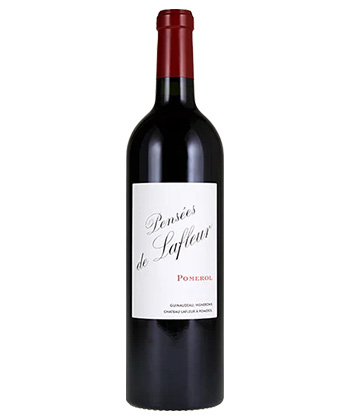
“Bordeaux is not a region whose wines I often find myself reaching for, but if money and access were no object, I would gladly enjoy a bottle of Pomerol. Château Lafleur is a small, family-owned and -operated estate that makes some of my favorite expressions of Pomerol, and while the wines are certainly expensive, they’re a veritable bargain when compared to their neighbors at Petrus and Le Pin. For the best intersection of value and indulgence, I would seek out the Pensées de Lafleur cuvée. It is produced from a separate clay-soil parcel of vines that runs diagonally across the center of the main vineyard and is considered its own highly sought-after cru rather than a more traditional second growth.” —Nayda Hutson, owner and beverage director, Renzo, Charleston, S.C.
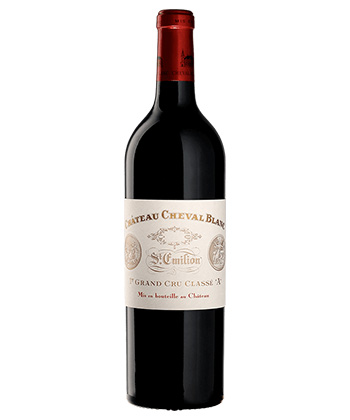
“My pick would be Château Cheval Blanc. There is a reason why a whole movie revolved around the mystique of this wine. Such restrained power, beauty, and grace. It will definitely make anyone change their opinion on Cabernet Franc- and Merlot-dominated wines.” —Andrew Noye, general manager, Husk, Savannah, Ga.
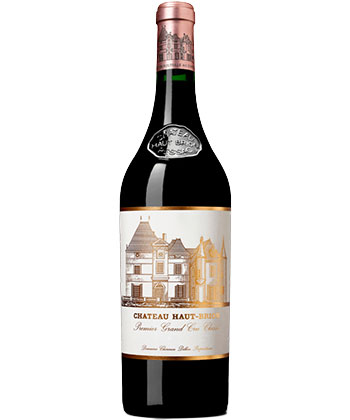
“For me, it is Château Haut-Brion, the oldest of the first growths and the one with the most singular personality. We recently opened two bottles of the 1959 at Le Chêne: One was dead, and the other was one of the greatest wines I have tasted this year, which tells you everything about buying mature Bordeaux. You are paying for a possibility, not a guarantee, and Haut-Brion rewards that leap of faith more consistently than anyone. If you are going to splurge once, this is where the money goes.” —Ronan Duchêne Le May, co-owner and beverage director, Le Chêne, NYC
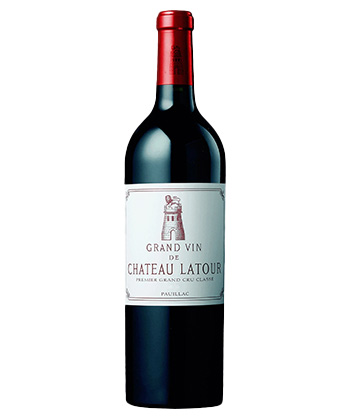
“It’s Château Latour. To me, Latour is the greatest expression of red wine on the planet, and has been for over a century. Sourced entirely from the legendary 47-hectare (116-acre) L’Enclos, the Grand Vin is the quintessential Left Bank bottling — old library, cedar, and brooding dark fruit on the nose, with a structure built to age for decades. Few wines improve as gracefully or as reliably; Latour has a rare knack for delivering even in difficult vintages. At roughly $900 a bottle (retail), it’s genuinely one of the better values in the higher end of wine — you’re paying less than you would for top producers around the world, for a wine that ages just as long, if not longer.” —Jonathan Eichholz, master sommelier, NYC
“Choosing only one Bordeaux is a challenge, but I am going to pick Château Haut-Brion. Yes it’s a first-growth Bordeaux, but that is not why for me it’s worth the money. Haut-Brion will age and improve for decades but is also approachable in its youth (very unique). The flavours are distinct and different, and early on, this wine will showcase earthy, savory, and smoky notes. It’s subtle yet complicated and, for me, extremely elegant. Bonus: It’s not the most expensive of the classified growths!” —Jennifer Huether, master sommelier and co-author of “The Social Herbivore: Perfect Pairings for Plant-Based Cuisine,” Las Vegas
“I would definitely splurge on a producer like Pontet-Canet. With a history going back to the 1720s and its inclusion in the Classification of 1855 it has the pedigree, but the recent decisions to move to biodynamics in wine growing makes it stand out to me. Great vintages are definitely worth the splurge, and even overlooked vintages stand out among the crowd!” —Gabriel Corbett, assistant general manager, JÔNT, Washington, D.C.
“Château Latour. Beyond its first-growth status, what really sets it apart is that the estate stepped away from the en primeur system because they wanted to release wines only when they felt they were actually ready to drink — a rare commitment to the consumer over the market. They also go to incredible lengths to protect authenticity and provenance while still embracing old-school traditions like hand-wrapping every bottle in tissue paper. It’s one of the few luxury wines where every detail feels genuinely intentional.” —Vivian Mehnert, wine director, COTE Vegas, Las Vegas
