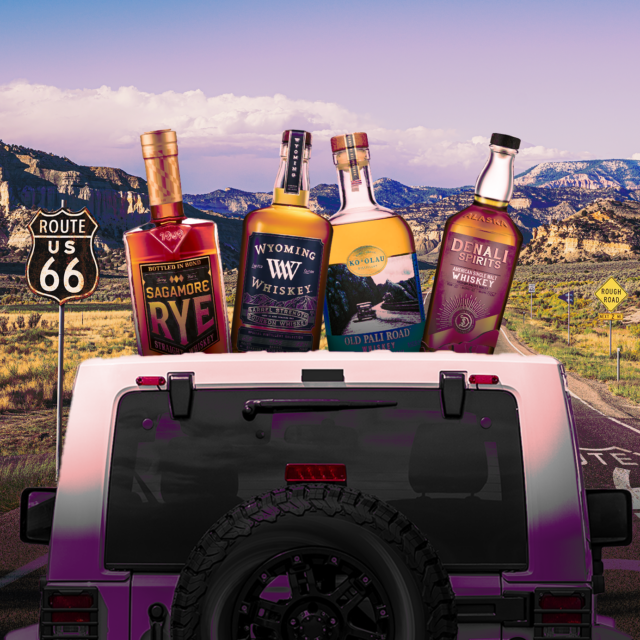
We Americans love our whiskey. Over the past 250 years, it’s a spirit that’s driven our economy, helped power westward expansion, and incited at least one rebellion. And these days, it’s made in each and every state, including the most remote corners of our star-spangled domain.
A couple of years ago, we got especially curious and asked: What’s the best bourbon to bring home from every state? It was a fun exercise, though admittedly, one that took a little digging. Bourbon is produced in all 50 states. Yet some regions are simply better known for other styles. Mid-Atlantic states like Maryland are historic centers of rye production. The Pacific Northwest built upon its craft brewing scene to develop some excellent single malts. Bourbon remains the United States’ most popular whiskey, but widening the aperture allows us to explore many compelling bottles that didn’t make our initial list a couple years ago.
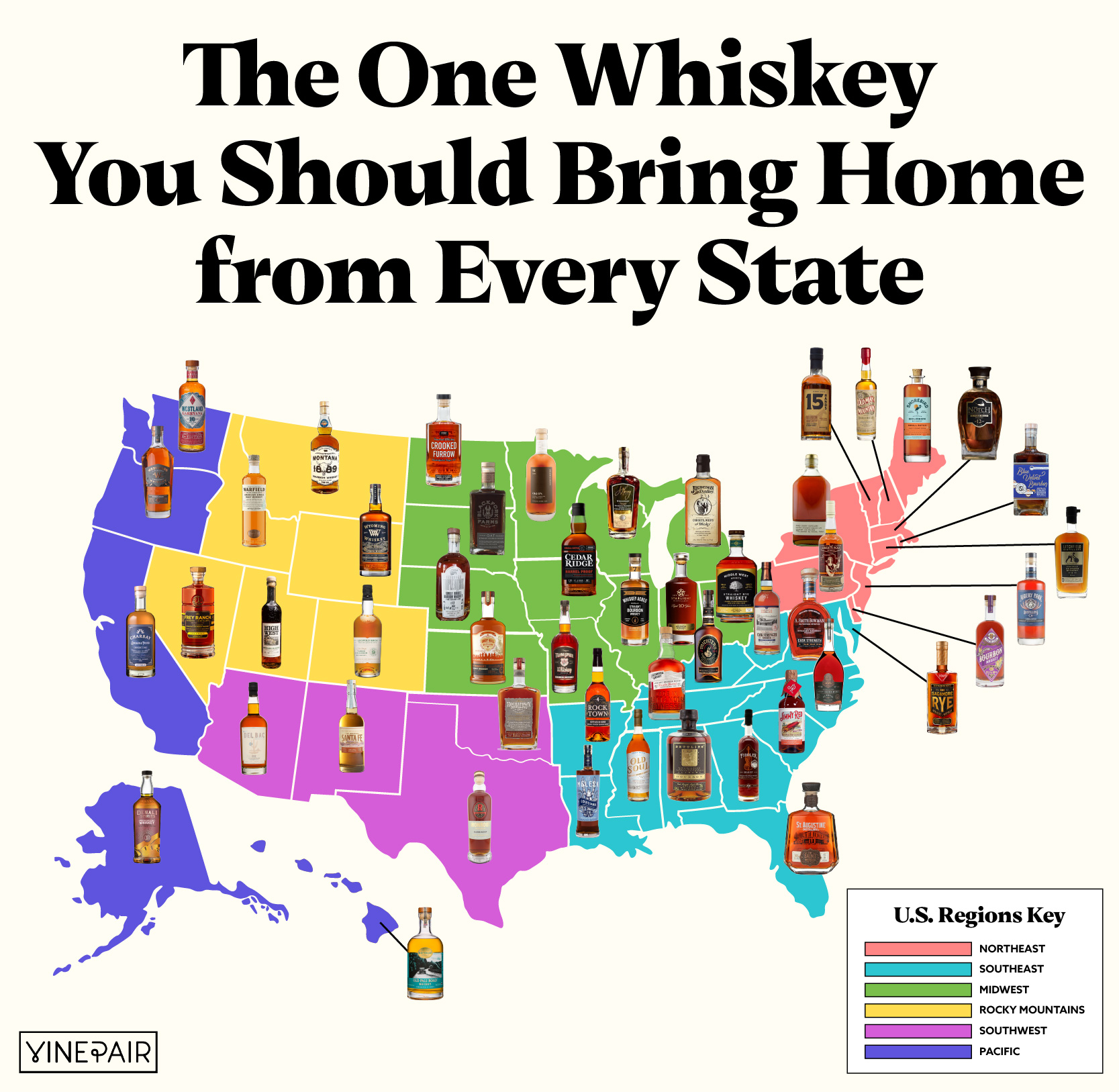
Below are 50 whiskeys to look out for when visiting each state. To hone our picks, we gave extra attention to whiskeys produced in-state, as well as expressions that have limited distribution or might otherwise be tough to find elsewhere. (Though a few of the bottles below do include sourced spirits in the blend.) And as with our bourbon list, bottles with an extra, know-it-when-you-read-it “cool” factor definitely had an advantage.
The criteria are admittedly imperfect. That doesn’t take anything away from these spirits, which showcase some of the best, most innovative, and unmissable whiskeys America has on offer.
Alabama
Dettling Single Barrel Cask Strength
There’s a good bit happening in Alabama’s whiskey scene, and several new and planned distilleries could mean a lot more in-state distillate in the very near future. But our top pick remains Dettling Single Barrel Cask Strength, produced by Dettling 1867 in Atmore, Ala. Founded in early 2014 by Seth and Vicki Dettling, the American brand licenses the name from Switzerland’s historic Dettling Distillery. The bourbon itself is comprised of barrels between four and eight years old, aged across char #3 and #4 barrels before selection by co-founder Seth Dettling. Expect big, bold flavor that fits the bourbon’s intense color — a result of Atmore’s extraordinarily hot aging climate.
Alaska
Denali Spirits American Single Malt Whiskey
Alaska has its fair (and growing) share of craft distilleries. Some produce bourbon, and a number of brands blend in-house distillate with whiskey from the Lower 48. But if you’re looking for whiskey produced entirely in the state, focus on American single malts. Founded in 2016, Talkeetna’s Denali Spirits produces its single malt in small batches and ages primarily in new American oak. (The brand also employs some sherry cask maturation.) Some recent bottlings have included solid age statements, including a six-year-old Distiller’s Select expression that hit (local) shelves in April 2026.
Arizona
“Mesquited-not-peated.” That’s become the motto for Whiskey Del Bac, the cult classic American single malt producer that’s forged its own path in smoke-influenced whiskey. Ode — formerly known as Winter Release — is one of its most celebrated (and limited) expressions. It starts with a heavily mesquited American single malt, which is finished across both “high-spice” rye barrels and a smaller portion of Pineau de Charentes casks. The result is a uniquely Southwestern “ode” to some of the world’s smokiest malt whiskeys.
Arkansas
Rock Town 4 Year Bottled-in-Bond Arkansas Bourbon
Little Rock’s Rock Town Distillery remains at the top of Arkansas’ whiskey game, with both workhorse and more adventurous expressions on offer. (Some recent offerings include peated and chocolate malt, among other grains.) But there’s no better expression of Rock Town’s craft than its bottled-in-bond bourbon, double distilled on site from a mash bill of 82 percent corn, 9 percent wheat, and 9 percent malted barley. (All three grains are grown in-state, by the way.) As mandated by law, the whiskey is then aged for at least four years before bottling at 100 proof.
California
Charbay Doubled & Twisted Whiskey
Charbay has been distilling its unique hop-flavored whiskeys since 1999. That most often involves taking “bottle ready,” carbonated beer and running it through its alembic pot still. The result is a house style that can drink like a wonderful amalgamation of brews and spirits — polarizing to some, but often downright delicious. The brand’s Doubled & Twisted Whiskey is a Frankenstein-esque blend of distilled straight malt, pilsner beer, and Big Bear Black Stout. Components are distilled and aged separately — the malt and pilsner for four years, Stout for eight — and blended prior to bottling.
Colorado
Leopold Bros 9-Year-Old Three Chamber Cask Strength Rye
Among whiskey nerds, Todd Leopold is equal parts hero, historian, and mad scientist. Working with Kentucky’s Vendome — a renowned copper and brass manufacturer — he resurrected the historic Three Chamber Still, which produces notably oily new-make spirits. To make its Three Chamber Rye, Leopold Bros starts with a mash featuring heritage Abruzzi rye. After distillation, barrels are filled at an uncommonly low barrel entry proof of 50 percent ABV. Leopold Bros releases gradually older batches every year, and while the impact of oak grows, the spirit has yet to lose its uniquely viscous, spiced qualities. This nine year rye is the oldest we’ve seen from the distillery. At between 108 and 112 proof, it’s also the strongest.
Connecticut
Litchfield Distillery 5-Year Double-Barreled Bourbon Whiskey
This bottle from Litchfield Distillery made our bourbon list, and it’s holding the top spot for Connecticut here. It’s a bourbon made entirely from Connecticut-grown grains, distilled on site, and aged in new oak. After initial maturation, Litchfield proofs its straight bourbon to 45 percent ABV and then re-barrels it for one year before bottling.
Delaware
Painted Stave Bottled-in-Bond Bourbon
Another carryover from our bourbon list, Painted Stave Bottled-in-Bond is produced on site by Delaware’s first craft distillery. It’s made from a mash of 66 percent corn, 26 percent rye, and 8 percent malted barley, then aged for at least four years in heavily charred barrels before bottling at exactly 100 proof. We’re also paying attention to Painted Stave’s other, more offbeat expressions, including a corn whiskey (featuring apple wood and mesquite smoked malts) and a pot still whiskey made in the Irish style.
Florida
St. Augustine The Saint Bourbon
To make The Saint, St. Augustine starts with its flagship Florida Straight Bourbon — made with a mash of 60 percent Florida corn, 22 percent barley, and 18 percent Florida wheat. Five mature barrels are hand-picked at a time, then finished for four to six months in casks that previously held the distillery’s Old Fashioned cocktail mix. The final product is then bottled at cask strength, often over 110 proof.
Georgia
ASW Distillery Fiddler Soloist Bourbon
ASW makes, bottles, and blends a range of good-to-great spirits. (If you’re flying through Atlanta, you can sample the range in a dedicated tasting room and restaurant in Concourse B.) Soloist is its fully in-house bourbon, distilled from 56 percent corn and a mix of malted rye, wheat, oats, and barley. Technically, it’s the first straight bourbon ever distilled in Atlanta, generally bottled at 100 proof but available in limited cask-strength varieties as well.
Hawaii
Koʻolau Distillery Old Pali Road Whiskey
America’s most remote state isn’t exactly overflowing with craft whiskeys, but there’s still a variety of local booze on offer. Koʻolau Distillery is the best-known producer. While it’s released limited expressions of 100 percent Hawaiian-distilled bourbon, you’re more likely to find Old Pali Road Whiskey, which is a blend of 90 percent corn bourbon and “aged American whiskey” from other sources. If you’re visiting for a while, we recommend exploring local rum producers, which have a more established history on the islands.
Idaho
Warfield Distillery Idaho Highlands American Single Malt Whiskey
Idaho doesn’t boast a lot of bourbon producers, but it’s quickly becoming a haven for American single malt. In-state barley — including two-row and crystal malt varieties — is distilled twice in copper pot stills, then aged for at least four years across American and European oak. Bottled at 92 proof, the resulting spirit isn’t afraid to hide its malt character, alongside notes of chocolate and leather. Warfield is still one of those “if you know, you know” producers, but don’t expect that low profile to last for long.
Illinois
Whiskey Acres 7-Year Bourbon Whiskey
A true “grain to glass” operation, Whiskey Acres grows its own grains, including some lesser-known varieties, and produces a variety of whiskeys on site. We wanted to call out its Oaxacan Green Corn Bourbon, but the most recent batch is sold out, even at the distillery. Instead, try the 7-year bourbon, the distillery’s current oldest product made from 75 percent corn, 15 percent soft red winter wheat, and 10 percent malted barley. The brand compares the drinking experience to “eating a macaroon in a cornfield.” (Be your own judge, of course.)
Indiana
Starlight 10-Year Reserve Bourbon Whiskey
Indiana is a true epicenter of American whiskey, most famously associated with MGP-owned Ross & Squibb. But it’s getting tough to ignore Starlight Distillery, a family-owned operation on a fifth-generation farm and winery, nestled 20 minutes north of Louisville. First released in 2025, Starlight’s 10-year bourbon is the current pinnacle of its whiskeys. Grains are grown on site and undergo sweet mash fermentation via both three- and four-grain mash bills. After double pot distillation, the whiskey is aged in barrels from Seguin Moreau Napa Cooperage. Each annual release is blended in small batches of around 10 barrels.
Iowa
Cedar Ridge Barrel Proof Bourbon
Cedar Ridge is one of the rare craft distilleries to produce the best-selling bourbon in its home state. And Cedar Ridge’s Barrel Proof Bourbon is likely the best expression of the house style. The whiskey is made with Iowa-grown corn (there’s no shortage of that around), then aged in warehouses that get battered by the region’s wild temperature swings. The final product is bold, oak-forward bourbon with memorable complexity and rye spice.
Kansas
Boot Hill Distillery Straight Wheat Whiskey
Boot Hill Distillery likes to highlight Kansas’s reputation as the bread basket of the world, and more specifically, the “Wheat State.” The farm and distillery grows its own grain — hard red winter wheat — for this 100 percent wheat mash bill, then ages it for two years before bottling at 100 proof.
Kentucky
Michter’s US*1 Barrel Strength Bourbon
Hands down one of the toughest states on our list to fill, not due to a lack of options, but an overabundance. There are dozens of great whiskey producers in the Bluegrass State; many boast fantastic distillery-only or local retail bottles. But we have to narrow things down to one, and for this list, we’re going with Michter’s US*1 Barrel Strength Bourbon. It’s Michter’s classic bourbon, made from an undisclosed mash bill and barreled at an incredibly low 103 proof. After aging, this single barrel release is bottled at cask strength. And while Michter’s makes its barrel strength rye available nationwide, the bourbon version remains a Kentucky-only release (for now).
Louisiana
J.T. Meleck High Proof Small Batch American Rice Whiskey
The folks behind J.T. Meleck are fourth-generation rice farmers. (They also raise crawfish.) Converting some of that crop into American-style whiskey might seem like an odd choice, but taste J.T. Meleck’s product, and you’re likely to agree: It works. Crafted from 100 percent Louisiana-grown rice, the whiskey is aged in new charred oak for at least four years. This higher-proof expression showcases the sweet-yet-balanced character of the rice whiskey, bottled at 118 proof.
Maine
In today’s market, Maine is a bit better known for the unaged stuff, like vodka, gin, and fruit-infused RTDs. Fortunately for fans of brown spirits, the state is home to a handful of craft producers churning out small production runs of (mostly) bourbon and single malt. We’d recommend checking out Portland’s Hardshore Distilling Company, which produces in-house bourbon under the Shorebird label. It’s made from a family-grown, four-grain mash of corn, wheat, rye, and malted barley.
Maryland
Sagamore Bottled-in-Bond Straight Rye Whiskey
Maryland is one of our nation’s most celebrated and historic whiskey states. Indeed, there’s an entire rye whiskey style named for what was once a Mid-Atlantic spirits powerhouse. While the epicenter of American whiskey has moved west, Baltimore’s Sagamore Whiskey has done a lot of heavy lifting in reviving Maryland’s distilling heritage. While Sagamore also sources some whiskeys, its bottled-in-bond rye is made entirely on site from a blend of high- and lower-rye mash bills (which, in the house style, are tripled distilled before aging).
Massachusetts
The Notch Nantucket Single Malt Whiskey
What if we told you some of America’s best whiskey comes from Nantucket? Since 2000, Triple Eight Distilling — the island’s sole spirits producer — has been somewhat quietly barreling its single malt. Dubbed “The Notch” (for “not Scotch”), the whiskey is aged for at least eight years in warehouses exposed to Nantucket’s unique island environment. The salty air and mild climate do wonders for the whiskey, which can go head-to-head with some of the best bottles on the other side of the Atlantic.
Michigan
Journeyman Distilling Corsets, Whips, and Whiskey
We tend to think wheat whiskey is poised for a breakout season. That’s a push led by major producers in Kentucky and Indiana, but don’t count out Michigan’s contributions. Located in Three Oaks, Journeyman is headquartered in a former corset and buggy whip factory. Its wheat whiskey pays homage to that history, made from 100 percent Michigan-grown wheat distilled just once before aging. It’s incredibly tasty, cask-strength stuff, with memorable mouthfeel and a surprising amount of lingering spice.
Minnesota
Far North Oklon Single Varietal Straight Rye Whiskey
Two years ago, we included Far North’s bourbon on our 50 states list. But frankly, we’re a bit more excited about its rye lineup, which includes a Single Varietal series made from rare grains. This version is made from 95 percent Oklon rye and 5 percent Oklon rye malt, a notably tall grain variety developed in 1993. That mash is fermented for at least four days before distillation in a hybrid pot/column still, then aged for two years in 15-gallon new oak barrels.
Mississippi
Back in 2017, Rich Grain Distilling made history with Mississippi’s first-ever legally made bourbon. Sadly, that operation has since gone under, though some of its whiskey has lived on through independent bottlings. Currently, there isn’t exactly an abundance of in-state whiskey, but some dedicated producers are keeping Mississippi on the map. One is Cathead Distillery, makers of the Old Soul whiskey line. The distillery’s 90 proof bourbon is actually a blend of locally distilled and Indiana-sourced whiskeys, which are blended before bottling. It’s solid stuff on its own, to be clear, but would also be great stirred in a bourbon Manhattan.
Missouri
J. Rieger & Co Monogram Whiskey
Kansas City’s J. Rieger makes plenty of excellent, straightforward expressions, including bottled-in-bond bourbons and ryes. But for a truly memorable pour, search for a bottle of Monogram, a highly limited annual release that allows the distillery to truly flex its muscle. The latest Monogram is a blend of bourbon, rye, and light whiskey, aged via an in-house solera system. The final blend then gets a “touch of” 15 year oloroso sherry. It’s a celebration of Kansas City’s historic role as a center for whiskey blending and sales — and a complex, nutty, delicious pour in its own right.
Montana
Bozeman Spirits Distillery Montana 1889 Bourbon Whiskey
Montana 1889 Bourbon honors the year Montana became a state. The expression is made from a mash of 60 percent corn, 30 percent malted barley, and 10 percent rye — all locally sourced. It’s then aged in 53-gallon new American oak barrels for at least three years, before bottling at 80 proof.
Nebraska
Long Dogs Distilling Barrel Proof Nebraska Triple Stack Bourbon Whiskey
Nebraska’s Long Dogs Distilling is proud to produce all whiskeys on site, eschewing the sourcing-while-aging model of many other craft distilleries. Seek out the barrel proof version of its wheated Triple Stack bourbon. At 36 months old, it’s a younger take on an American classic, but as Long Dogs says, “Like Nebraska itself, it’s not for everybody!”
Nevada
Frey Ranch Farm Strength Uncut Bourbon
This one is already familiar to many whiskey drinkers, and rightly so. Frey Ranch has been producing true grain-to-glass whiskey for well over a decade. Over time, its profile has become more refined, without losing the punchy character dedicated fans know and love. Its “Farm Strength” Bourbon is a true hallmark of the brand, distilled from four grains and bottled between 120 and 132 proof. Be on the lookout for special-release single barrels, as well as a 10 year bourbon set to hit the market later in 2026.
New Hampshire
Tamworth Distilling The Old Man of the Mountain Bottled In Bond Bourbon
Tamworth Distilling was founded in 2015, and it makes a wild range of adventurous spirits, from Thai chili gin to venison-flavored whiskey. (Yes, you read that last one correctly.) Its flavored whiskeys especially are worth your attention. But we think the truest expression of Tamworth’s abilities comes through in this bottled-in-bond expression made from 82.4 percent yellow corn, 11 percent rye, and 6.6 percent malted barley. It’s then double pot distilled before aging in 53-gallon new American oak barrels. Start your Tamworth tasting with this bottle — then explore its more unruly offerings.
New Jersey
Asbury Park Small Batch Bourbon
Newsflash: The Garden State makes good whiskey! Asbury Park sources corn, rye, and malted barley from nearby Rabbit Hill Farms, then produces this whiskey on site in Asbury Park. Barrels are aged four years and then batched six to 10 casks at a time for a truly small-batch take on American whiskey. It’s very solid stuff, with character and richness beyond what its age statement might suggest.
New Mexico
Santa Fe Spirits Original Mesquite Whiskey
Santa Fe Spirits has a range of single malts on offer, but for some decidedly Southwestern flavor, go with the Original Mesquite Whiskey. It’s distilled from 65 percent unsmoked malted barley and 35 percent mesquite smoked malted barley, double pot distilled, then aged a minimum of three years before bottling at 92 proof.
New York
Kings County Barrel Strength Empire Rye
New York City’s oldest operational whiskey distillery is producing some of the state’s best rye. (Indeed, Empire Rye is now its own spirits designation, at least among New York State producers.) This particular expression is distilled from 80 percent rye (all New York-grown) and 20 percent malted barley. It’s aged for at least four years and bottled at variable strength, depending on the batch. Kings County’s Barrel Strength Empire Rye is usually a limited drop and Brooklyn favorite, so be on the lookout next time you’re in town.
North Carolina
Broad Branch Big Winston Bourbon Whiskey
Among craft whiskey fanatics, North Carolina’s Broad Branch Distillery has caused quite a stir, and in the best possible way. The operation’s single barrel selections are potent and memorable — and sometimes bottled at proof points well above hazmat level. This 100 proof single barrel offering is a bit more accessible (and still plenty flavorful), distilled from a low rye mash and aged at least seven years before bottling.
North Dakota
Proof Artisan Distillers Crooked Furrow 4-Year Bourbon
Fargo’s Proof Artisan Distillers keeps a low profile. Even though it’s been making bourbon for around a decade, the spirit can be tough to track down. But if you know where to look, it’s still possible to find spirits from North Dakota’s first legal whiskey distillery, including recent expressions via independent bottler Lost Lantern. The whiskey itself is distilled from a mash of 80 percent corn and 20 percent malted barley, which is then subjected to some seriously intense temperature swings along the Great Plains. It’s slowly proofed down to 92 while still in the barrel, which helps preserve unique flavors and texture.
Ohio
Middle West Spirits Dark Pumpernickel Rye
While neighboring Kentucky and Indiana get more attention, don’t sleep on Ohio for quality American whiskey. One of our favorites is Middle West’s Dark Pumpernickel Rye. It’s actually made from a four-grain mash bill of pumpernickel rye, red winter wheat, corn, and barley, then aged for at least three years before bottling at 96 proof.
Oklahoma
Hochatown Distilling Small Batch Select Straight Bourbon Whiskey
“Where the wind comes sweepin’ down the plain!” Hochatown is holding it down for the Sooner State, offering this in-house, never-sourced expression in addition to a bottled-in-bond version. The Small Batch Select ticks the proof up to 104, providing a bit more oomph per pour.
Oregon
Forget what you thought you knew about beer cask finishes. Westward’s already-excellent, mature single malt is finished for an additional year in locally sourced stout casks. (Portland has no shortage of craft breweries, after all.) The result is a chocolate-forward sip that retains the lusciously fruity characteristics of Westward whiskey.
Pennsylvania
Liberty Pole Spirits Old Monongahela Full Proof Rye
Pennsylvania’s Liberty Pole is one of several craft producers embracing this historic style of rye whiskey. This expression starts with 61 percent rye, 13 percent wheat, 13 percent malted rye, and 13 percent malted barley. After distillation, it goes into the barrel at just 108 proof, which ultimately leads to a sweet-and-spicy aged whiskey we could revisit time and time again. After maturation, the whiskey is proofed back to 108, which we think is prime territory for this particular style and profile.
Rhode Island
ISCO Blue Velvet Straight Bourbon
Rhode Island’s first legal post-Prohibition distillery makes excellent gin and vodka, which are fixtures in the local drinks scene. But we can’t ignore ISCO’s (the Industrious Spirits Company) blue corn bourbon. Both Mexican and American blue corn varieties are mashed, pot distilled, and aged for four years before bottling.
South Carolina
High Wire Jimmy Red Straight Bourbon Finished in Peach Brandy Casks
In 2011, just two ears of Jimmy Red corn were left on Earth. High Wire Distilling helped lead the charge in bringing Jimmy Red back from the brink of extinction. From those efforts, we now have a variety of Jimmy Red bourbons. One of our favorites is this expression, finished in High Wire’s own peach brandy casks for additional sweetness that tastes fresh from the orchard.
South Dakota
Black Fork Farms Farmboy Oat Bourbon
One of Black Fork Farms’ most limited releases, Farmboy Oat is part of the distillery’s Native Grain series, which includes whiskeys crafted from heirloom corn. This particular expression adds heavy yellow Dakota oats to the mix. It’s aged at least seven years and bottled at 93 proof. Keep a lookout if you’re passing by, as this bottle is only available locally.
Tennessee
Chattanooga Whiskey Tennessee High Malt Straight Bourbon Single Barrel
We mean no shade to Tennessee’s legacy whiskey producers, because they’re churning out some stellar whiskey that simply can’t be ignored. But we’re giving our biggest hat tip to Chattanooga Whiskey, the riverside upstart that’s not afraid to dip into the experimental (and sometimes oddball) projects. Its single barrel bourbons come from a dizzying variety of mash bills, each made with at least 25 percent malted grains to showcase what Chattanooga calls its own “Tennessee High Malt style.”
Texas
Ironroot Republic Harbinger 115 Straight Texas Bourbon
We love seeing an increasingly wide selection of Texas whiskeys on the market. Many — including Still Austin and Milam & Greene — ship most places in the U.S. Whiskey from Ironroot Republic is a little tougher to find, but it’s no less delicious. For an in-state purchase, try the distillery’s Harbinger 115 Straight Texas Bourbon, made from purple corn, bloody butcher corn, flint corn, yellow dent corn, and rye. The Texas heat works its magic in the barrel, giving this 115 proofer a unique medley of fruit from nose to finish.
Utah
High West Bottled-in-Bond Straight Rye Whiskey
Founded in 2006, High West is Utah’s first legal post-Prohibition distillery, one that truly helped pull rye whiskey back into the American mainstream. While High West’s most famous releases include (transparently) sourced and blended whiskey, its homemade whiskey is ready for some time in the sun. This bottled-in-bond rye is made from 80 percent rye and 20 percent malted rye, which lends a rich nuttiness to each sip.
Vermont
Vermont Spirits 15 Hands Bourbon
Vermont Spirits has started distributing its No. 14 Bourbon nationally, at least via e-commerce. So for a special, distillery-only bottle, keep an eye out for 15 Hands Bourbon. It’s a high-barley expression finished in the distillery’s own XO brandy barrels.
Virginia
A. Smith Bowman 10-Year Cask Strength
We’ve called A. Smith Bowman a secret weapon in spirits giant Sazerac’s portfolio. By pot distilling first-run spirit from sister distilleries, the small Virginia operation makes some travel-worthy whiskey. One of its best expressions is the 10-year cask strength, released in tiny quantities and most “readily” available via an online lottery. The kicker? Winners have to pick up those bottles in person. If luck is on your side, prepare for a road trip.
Washington
Westland Garryana Single Malt Whiskey
Somewhat typical of the Pacific Northwest, Washington is big on single malts. Westland is the state’s most widely celebrated producer, and it’s been a staple of the craft whiskey scene for two decades. The distillery’s most premium and talked-about expression is Westland Garryana, which utilizes native Oregon white oak for primary aging. At 10 years old, the latest edition is Westland’s first age-stated whiskey, which also utilized PX sherry, rum, and ex-bourbon casks for secondary maturation.
West Virginia
Smooth Ambler Founders’ Cask Strength Series
Over a decade ago, Smooth Ambler helped make sourcing and blending whiskey cool again. So it’s easy to forget the West Virginia operation also produces its own whiskey. Its Founder’s Cask Series isn’t terribly common, but if you do find a bottle, consider snagging it quickly. This bourbon is distilled from 71 percent corn, 21 percent rye, and 8 percent malted barley, then aged for at least six years before bottling.
Wisconsin
J. Henry & Sons Husk Beer Barrel Finish
First released in 2025, Husk has a complex pedigree. First, the distillery’s signature heirloom red corn was malted and brewed into a beer. That liquid was aged in used bourbon casks for a year before being bottled. Finally, bourbon was put back into those barrels for secondary maturation.
Wyoming
Wyoming Whiskey Barrel Strength Bourbon Whiskey
Wyoming Whiskey is on shelves nationwide, and you’ll also encounter its whiskey blended into some products from other producers. It’s consistently good stuff, though a higher-proof version can be tough to come by. The distillery’s Barrel Strength Bourbon is quite limited, aged for around eight years and bottled just one or two barrels at a time.
