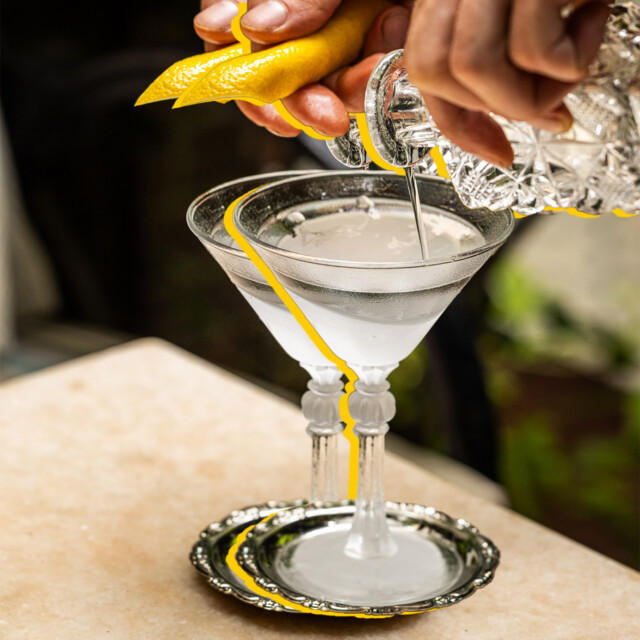
Cocktail trends come and go, but the Martini is forever. People might debate whether its eternal presence hinges on its flavor or how it makes one feel, but it doesn’t matter in the end. If society ever decides to turn its back on the Martini, humanity’s demise will likely soon follow.
But it’s not all about the aesthetics, the Martini is also deceptively complex. It doesn’t look complicated, given its appearance as clear-to-opaque liquid in a Nick & Nora or its eponymous V-shaped glass. Yet inside each vessel is a melange of ritual, science, historic nuance, and bartending artistry, with the occasional dash of personal preference thrown in for good measure. This makes the drink surprisingly intimidating — I’ve had a few bartenders over the years confess to me that making a Martini à la minute based on customer-driven specs is the most nerve-racking part of their job.
These elements also keep the drink from being static. The Martini is fertile ground for subtle evolution, and these changes simply expand the possibilities of the Martini-drinking experience as opposed to merely creating “riffs on a classic” (even though riffs on the classic do indeed exist and are noteworthy). The hospitality industry naturally serves as the prime mover behind the Martini’s shape-shifting abilities. And over the past few years there have been a few bars and restaurants that have particularly enhanced the complexity of how we define the modern Martini.
Here, we chart out 10 Martinis that helped shape how we understand the cocktail today. Created as original recipes or specific specs at great bars across the globe, these provided the inspiration behind a countless number of Martini styles and variations — from the popularization of the sidecar to the Martini that launched a thousand super savory riffs. No one contribution is greater than the other, so it’s pointless to try to discuss the following establishments in terms of a hierarchy. It’s best to simply appreciate how they all played a part in progressing the Martini’s perpetually ongoing narrative.
The Martini as a Destination Drink
Venue: Dukes Bar
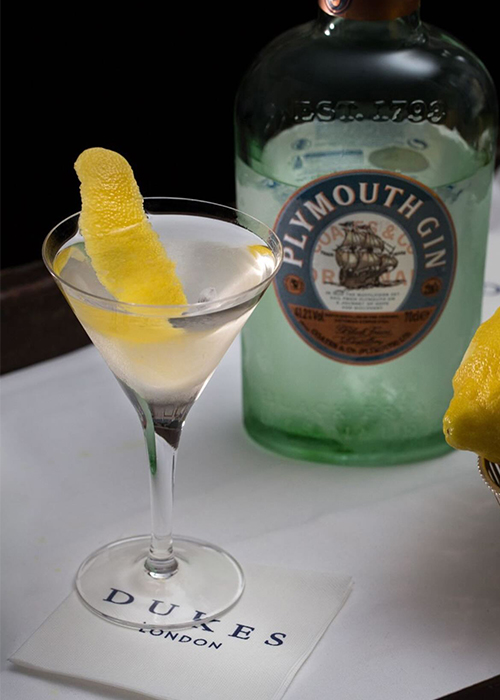
Initially created in 1985 by bartender Salvatore Calabrese, a Dukes Martini consists of roughly 5 ounces of high-proof freezer gin served at a piercingly cold temperature into a vermouth-rinsed glass. It’s so famous, it spawned its own self-named Martini subcategory. It also transformed the Martini into a drink worth traveling to a specific location to enjoy. There’s a distinct difference between enjoying a Dukes Martini and enjoying a martini at Dukes, and this has everything to do with being immersed in the sense of place that pulses through this hotel bar tucked within a secluded slice of London’s Mayfair district. The Martinis are great, of course, but the vibe is the drink’s defining element.
A Bartending Legend Revives Orange Bitters
Venue: The Rainbow Room
Orange bitters were an integral part of the earliest Martini recipes, but they all but disappeared from both the drink and the market by the early ’90s. Their near-extinction didn’t set well with legendary bartender Gary “Gaz” Regan. Rather than griping about their disappearance, he set out to revive the category by making his own orange bitters based on a recipe he found in a 1946 book called “The Gentleman’s Companion.” He shared his early iterations with a few of his bartending friends; one of the recipients was none other than Dale DeGroff, who began playing around with them at The Rainbow Room (which presumably meant dropping them into a Martini, given DeGroff’s knack of reviving original cocktail recipes). Eventually, Regan found a recipe he liked and partnered with the Sazerac Company in 2005 to sell his creation as Regan’s Orange Bitters No. 6. The new bottle gave the bartenders of the fledgling craft cocktail scene a new element to introduce into their own Martini schemes.
The Martini Gets Its Sidecar
Venue: Pegu Club
A Martini is best served — and enjoyed — cold. Science causes chaos and disruption to this beautiful principle: The longer the Martini sits in the glass, the warmer and less delicious it gets. Martini drinkers dealt with this sad reality for decades until Audrey Saunders changed the game in the early 2000s. At her seminal New York bar Pegu Club, Saunders started serving guests half-pours of their Martinis in the glass while the other half chilled in a small carafe ensconced in ice. It kept the Martini experience appropriately cold from start to finish. Though Saunders isn’t credited with inventing the concept of a sidecar, she did incite its modern resurgence; the tactic proliferated throughout the New York City bar scene, most notably through key bartending figures like Julie Reiner.
Martinis Made with Theatrical Flair
Venue: The Connaught Bar
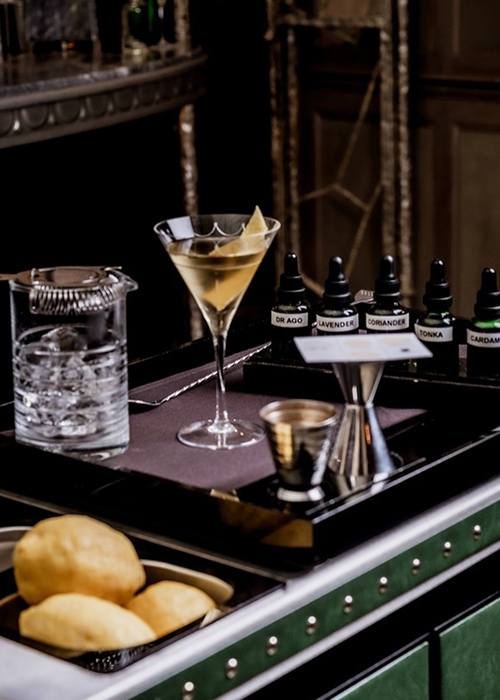
The Martini is a ritualistic drink at its core, but its customs are traditionally personal and meted out through individualized specs. The Connaught Bar in London augmented this ritual by incorporating its own sense of ceremonial showmanship when the hotel bar debuted its Martini table cart service in 2008. After guests participated in the liquid liturgy by selecting core elements like gin and bitters, bartenders stretched one hand upward and poured the drink from high above the glass, expressing the stream with a lemon peel with their free hand. It looked like the bartending equivalent of a musician playing a theremin, and it pushed the artistry behind the routine of Martini preparation to its fullest, most captivating extent. The Martini cart concept is widespread these days, and some bars and restaurants use it as a stage for flashy pour techniques. Those that do owe a debt to Connaught’s penchant for flair.
The Martini Riff Gets Serious
Venue: Dear Irving
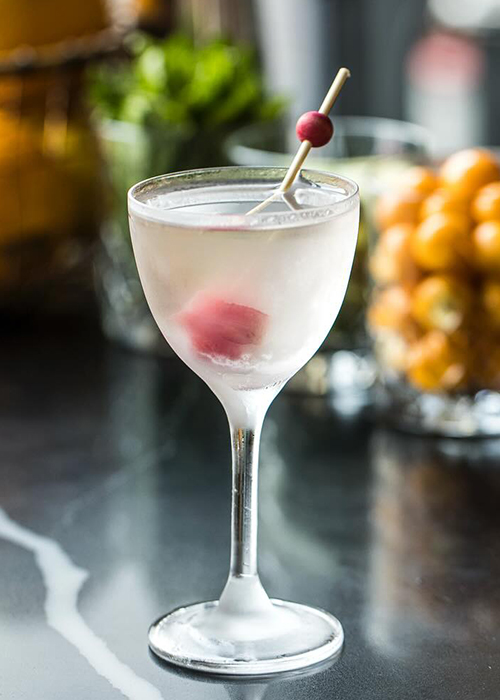
At the end of the 2000s, Martini riffs were still largely defined by wannabes like the Appletini and the Lemon Drop Martini. Then Meaghan Dorman got behind the stick at Raines Law Room in 2009, started whipping up Gibsons, and reminded everyone what a real Martini riff looked like. Five years later at Dear Irving, she successfully executed a riff on a riff, replacing the drink’s traditional dry vermouth with white (bianco) vermouth to give the cocktail a slightly sweeter profile. The wannabes are still out there, and to be fair, they can be good when properly made (exhibit A: the Espresso Martini). But they now must share the spotlight with legit Martini variations thanks in part to Dorman’s handiwork.
The House Martini Levels Up
Venue: Maison Premiere
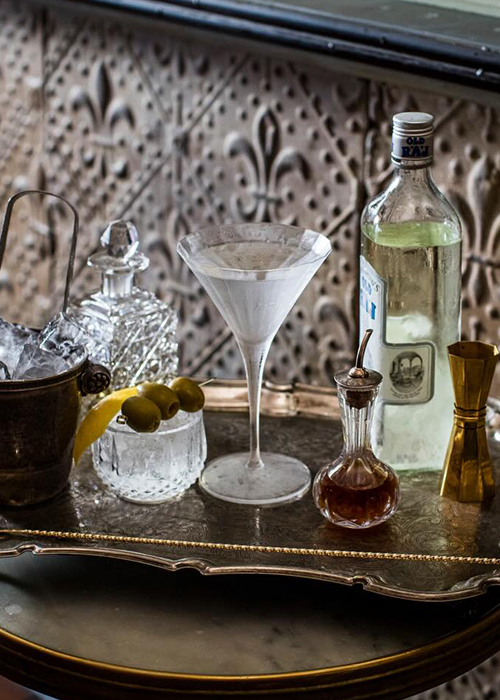
The notion of a house Martini is nothing new to the American bar scene. However, it feels fair to say Brooklyn’s Maison Premiere pushed the limits to what a house Martini may look like when it introduced its signature Old King Cole Martini around 2015. They served the drink tableside with an elaborate presentation, providing the first indication that this wasn’t a basic beverage. The specs backed up this signal: High proof, freezer-cold Old Raj gin, extra-dry vermouth, and three dashes of orange bitters, garnished with a lemon twist and Castelvetrano olives. Everything about the drink felt more special than a house Martini deserved to be. Order one now, and that feeling is still present.
The Freezer Door Martini Revival
Venue: Dante
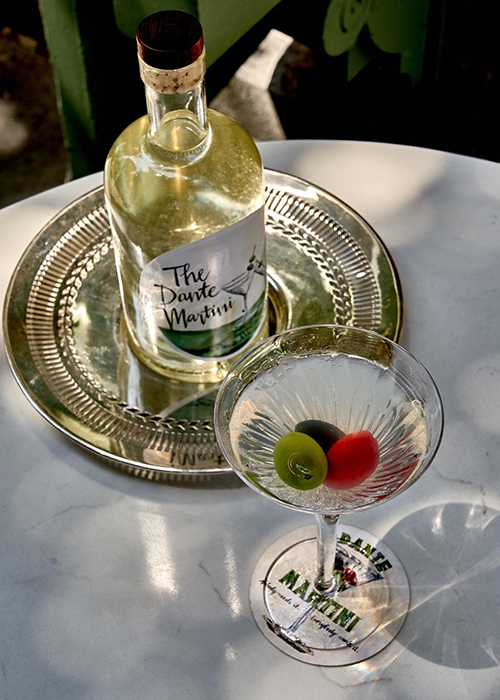
Freezer door Martinis were popular during the mid-20th century, but practically disappeared during the disco drink era. It seemed poised for a comeback during the craft cocktail revival in retrospect, if only because the idea of sticking a batched bunch of pre-diluted Martinis in a freezer seems like a no-brainer. It just needed a champion with a large enough platform. Dante not only had that stage, the bar expanded it to an amphitheatre with the introduction of its Martini Happy Hour in 2015, giving guests the chance to enjoy a piercingly cold drink for $10. While there’s little reason to believe the freezer Martini revival wasn’t going down in other parts of the country, Dante’s doings gave the trend the push it needed to fully go mainstream. Nowadays, it’s not unusual to walk into a cocktail bar and see them straining the limits of their icebox to achieve maximum Martini chilliness.
Martinis Get a Savory Spin
Venue: Bonnie’s
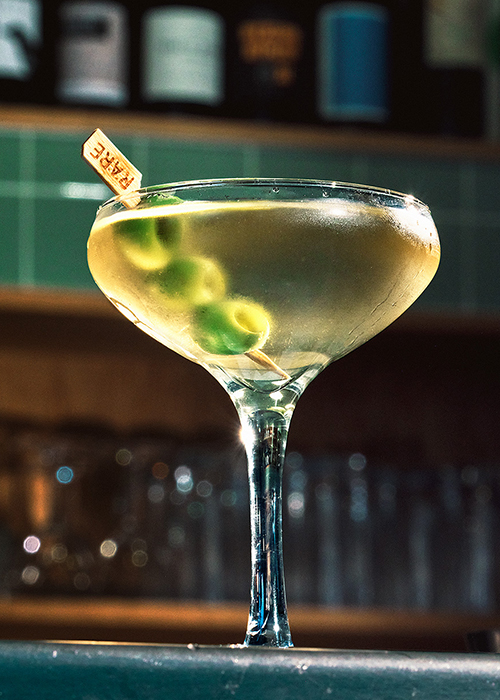
Dirty Martinis have been around since the dawn of the 20th century, and they traditionally contained the same type of dirt (olive brine). While this made the concept consistent, it also left a lot of room for innovation. In 2022, the Brooklyn’s Cantonese American restaurant Bonnie’s leaned hard into that empty space when it launched its signature MSG Martini, a variant that added the unfairly-maligned flavor enhancer and shaoxing wine along with the usual olive brine. The result was a Martini of Bob Saget-levels of dirtiness, and it not only helped push the limits of what a Dirty Martini can be, it also kick-started the burgeoning savory cocktail trend into overdrive. It’s not too hard to find a Dirty Martini whose profile reads more like a snack than a drink, as flavors ranging from sour cream and onion to crispy chicken skin are on the table.
The Martini as a Holistic Experience
Venue: Le Veau D’Or
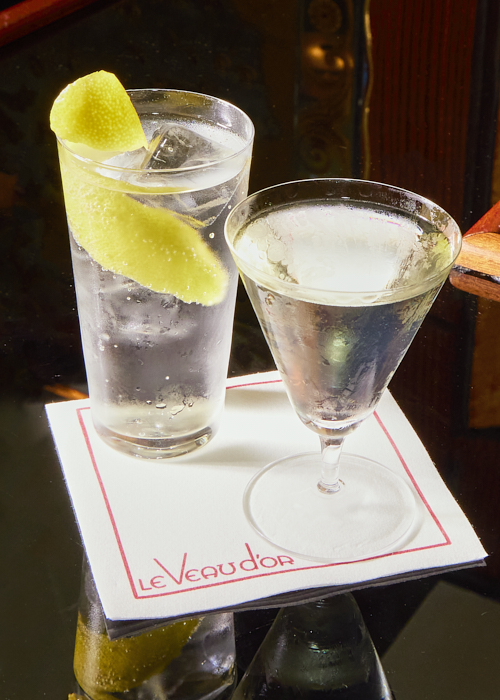
The Martini can be such an intensely personal cocktail, it may be difficult for guests to deviate from personal preference. While Martini experimentation obviously occurred during the craft cocktail revival era, convincing those set in their ways to try something new was a tricky proposition. When NYC’s legendary French bistro Le Veau D’Or reopened in 2024, it took a unique approach to this conundrum by offering two Martini options. The “Martini Your Way” allowed guests to stay in their comfort zone. The “Martini Our Way,” on the other hand, is a riff involving a sidecar of vermouth and sparkling water chilled by Martini-soaked ice. The duo encouraged patrons to color outside their lines, but also reassured them their own specs were just as good. It set the template for bars to take a gentle approach to guiding guests through Martini drinking — one that’s beginning to become more commonplace.
The Martini Glass Swap
Venue: Hillstone Restaurant Group
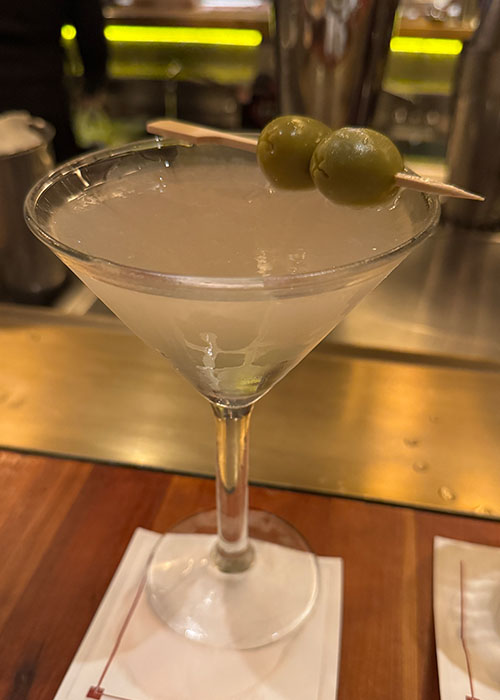
The Hillstone Restaurant Group is a restaurant collective known for its upscale-yet-approachable chain eateries with locations across the country. It’s also the most unlikely place to run into one of the Martini world’s coolest innovations, the glass swap: About halfway through a guest’s Martini session, the bartender will pour the remainder of the drink into a freshly chilled glass. Nobody knows when the venues in Hillstone’s gastronomic empire started doing this simple yet oh-so-effective tactic — the company tends to be mum about its operations — but some people guestimate it’s been a thing for a couple decades. Regardless of what it actually did start, the swap’s ability to astonish and delight amid such unexpected surroundings continues to endure. These days, a lot of the “cool kids” (read: Places on all of the “best bars” lists) are pulling off this tactic, which makes it even more fun to think that a chain restaurant group kicked off the trend.
*Header image photos retrieved from Maison Premiere, The Connaught Bar, and Dukes London
