Goods are generally more expensive at restaurants than the supermarket — whether that be a cheeseburger, a roast chicken, or a bottle of wine. Consumers might gawk at a restaurant menu’s prices without considering the unfortunate reality that markups are necessary for a bar or restaurant to function as a business. A number of factors — rent, labor, utilities, credit card fees, and other operational expenses — eat at profit margins, and operators have to properly price food and beverage items to compensate.
As the U.S. drinking rate continues to hover at record lows and economic pressures make it more difficult to dine out, fewer consumers are choosing to imbibe at restaurants. What was once the ultimate life preserver of hospitality profits is now deflating: Restaurants used to expect alcohol sales to account for 60 percent of its profits, and now, that figure is on a nosedive toward 30 percent.
Unlike food or cocktails, where the added value from labor and preparation is obvious, consumers are often left in the dark about what goes into wine markups.
Master sommelier and partner in Houston-based Goodnight Hospitality June Rodil says the economics of restaurant pricing is a topic that many fail to recognize when comparing on-premise costs to those at retail shops. Good service is just the surface, and the guest is paying for all that’s beneath it.
“They are paying for that wine to have been thoughtfully selected, purchased at the right moment, stored correctly, served at the proper temperature, presented in the right glass, and contextualized by a knowledgeable team,” she says. “Much of what the markup supports is that invisible layer of care, and to me, that is where the hospitality actually lives.”
To shed some light on how these markups are determined, we asked beverage directors and sommeliers from seven markets to share how they calculate their menu prices.
Denver
Venue: Apple Blossom
Percent of bill that’s markup: 60 to 70 percent
At Apple Blossom, a seasonally focused restaurant in Denver with a robust wine program, beverage director Kinga Mackowiak includes factors like glassware, credit card fees, and labor when determining the markup. The cost of the latter, she says, is less drastic than it would be for cocktails or food, where the work that goes into preparation is more extensive. In general, 60 to 70 percent of the listed menu price on a bottle of wine is markup, Mackowiak shares. Altogether, she estimates Apple Blossom takes 38 to 48 percent of the bottle’s sale price as a profit.
However, she does not follow an established playbook for wine pricing. Mackowiak instead evaluates how likely the wine is to sell, at what frequency, and how it matches the other prices on her list — even if that means keeping inconsistent profit margins. For her, pricing is about making her wine program feel cohesive and fair for guests.
“Wines from more established regions can generally support a slightly higher markup because guests are familiar with them and the demand is often stronger,” she says. “I also review the entire list comparatively rather than pricing each wine in isolation. For example, I want a guest paying more for a Pinot Noir to receive a clear increase in quality compared with the lower-priced Pinot Noirs on the list. Maintaining that relationship between quality and price is more important to me than applying the exact same multiplier to every bottle.”
Fairhope, Ala.
Venue: Deep Roots Restaurant Group
Percent of bill that’s markup: 76 percent
William Jones, beverage director for Deep Roots Restaurant Group, which operates a number of venues in Fairhope, Ala., says his bottle markups vary by location, but the average bottle across the hospitality group accounts for 24 percent of its menu price making the average markup 76 percent. Overall, Jones aims for a prime cost of 58 percent, accounting for glassware, labor, insurance, and other team expenses, meaning the restaurant group makes around 42 percent in revenue per bottle. But that’s just the goal, and a number of external forces in recent years have thrown wrenches at that aim.
“With tariffs, raising costs across the board, and heightened labor costs, it is harder than ever to reach these goals,” Jones says. The pandemic also warped how Deep Roots calculates its pricing. “We have had to tighten margins to reach the same goals due to the ever-shifting world we live in,” he says.
Charleston, S.C.
Venue: Renzo
Percent of bill that’s markup: 75 percent
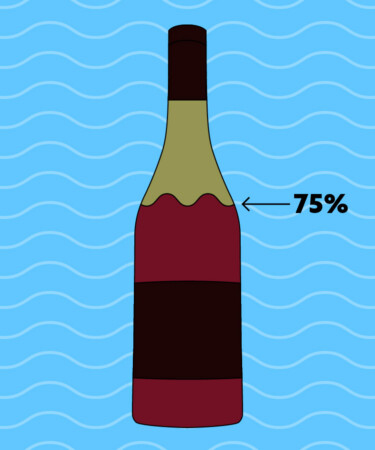
At Renzo, a natural wine and pizza hub in Charleston, S.C., beverage director Nayda Freire marks up the wines on her bottle list anywhere from two-and-a-half to four times the original price. The typical bottle, however, falls at the higher end of that list, meaning Renzo’s average markup accounts for 75 percent of its final cost.
Like most beverage directors, Freire does not follow set-in-stone guidelines for coming up with her wine program’s final prices. She says bottles with a lower initial price receive higher markups, whereas the costs of already-expensive bottles are just slightly raised. Freire finds that offering bottles across the price spectrum combats the rising costs affecting the industry.
“So many of our costs — such as insurance, glassware, labor, and technology — have gone up quite drastically and in some cases unpredictably over the last few years, so we find that operating a dynamically priced list helps mitigate some of these factors and put money back into the restaurant.”
Other than the bottle cost, glassware is the biggest factor that goes into Renzo’s wine markups. Freire’s labor expenses are low, as tips make up for Renzo’s front-of-house costs, allowing her to invest more in high-quality glasses and coveted wines. “We have a little more wiggle room in the budget to buy wines we’re proud of and price them fairly,” she says.
Boston
Venue: The Nautilus
Percent of bill that’s markup: 75 percent
In a “good year,” Boston’s The Nautilus shoots for a four-times markup, whereas markups in a “bad year” are closer to three-times, according to co-founder Stephen Bowler. (In a good year, 75 percent of the bottle’s cost is markup, and in a bad year, 66 percent of the final cost is markup). Deciding on wine pricing at The Nautilus begins with setting a goal for how much wine sales should drive the restaurant’s total earnings in a given week, month, and year: Bowler says he and his team aim for wine purchases to account for 25 to 30 percent of the business’s revenue.
Bowler considers how exclusive or allocated a wine is, its consumer demand, its wholesale cost, the style of wine, and its likelihood to sell, when determining where a given bottle should fall price-wise. Other factors include labor costs, storage, appliances, decanters, rent and utilities, and Coravin gadgets. His team constantly assesses the list and inventory and shuffles prices around to promote certain bottles.
“If the wine has been in inventory for a while and we’d like to move it, we may drop the price,” he says. “If the wine has been in inventory for a while and it has become extremely rare, we may raise the price. Seasonality also matters — you can charge more when you’re busy or lower prices when you are not. It’s really an art form.”
Phoenix
Venue: Kid Sister
Percent of bill that’s markup: 70 percent
The base cost of a bottle at Phoenix-based natural wine bar Kid Sister, generally translates to 30 percent of its menu price and the remaining 70 percent is markup. But general manager and beverage director Courtney Lewandrowski says the bar operates on a 5.76 percent net profit margin. That means roughly 64 percent of a bottle’s cost is spent on operational, labor, and other costs. As a wine bar with a focus on niche, low-intervention producers, Lewandrowski hopes to keep prices reasonable for consumers to explore new regions, grapes, and bottles, and low enough to retain customers.
“Our bottle pricing decisions are driven more by accessibility and a belief in the long-term health of the industry than by a set formula,” she says.
New York City
Venue: Long Count
Percent of bill that’s markup (by-the-glass): 80 to 82 percent
At Long Count, a wine bar dedicated to pouring bottles with 10 years or more of age, wine director Drew Brady determines pricing based on his profit margin goals for the program as a whole. Altogether, Brady estimates that the total cost of Long Count’s by-the-glass program is 80 to 82 percent markup, the total amount that the bar makes on the glass list before including operational costs.
Industry convention is to sell one glass at the bottle’s wholesale price. Brady does not follow that rubric. “We often price well below that rule on the more unusual or rare wines because accessibility is part of the program,” he says. “That lets us pour special projects, cult producers, intensive farming experiments, and rare or unfamiliar varieties at prices that encourage guests to take a chance on them.”
To accommodate for low prices on lesser-known bottles, Brady places familiar, recognizable grapes, regions, and producers on his by-the-glass list with the expectation that they will make up the bulk of the program’s profits. But that isn’t always easy, as he still wants these baseline bottles to match the caliber of the others in the program.
“Those recognizable wines are likely to sell more frequently, so they can anchor the list and provide strong, consistent margins,” Brady says. “That gives us more room to be generous elsewhere — really generous. A few wines may lose out on the first pour, but they are offset by the higher-volume bottles with stronger margins.”
Houston
Venue: Goodnight Hospitality
Percent of bill that’s markup: 55 to 70 percent
At the concepts under Houtson’s Goodnight Hospitality, Rodil similarly uses a sliding scale to determine how much to markup a given bottle. Depending on the bottle, she aims for its wholesale price to account for 30 percent to 45 percent of its menu cost. That means the bottle markups can account for anywhere from 55 to 70 percent of the final price.
Rodil is constantly assessing each restaurant within the hospitality group’s margins and targets and comparing them against the necessary costs to run the businesses, including labor, waste, Coravin tools, storage space, appliances, insurance, and stemware, among others.
