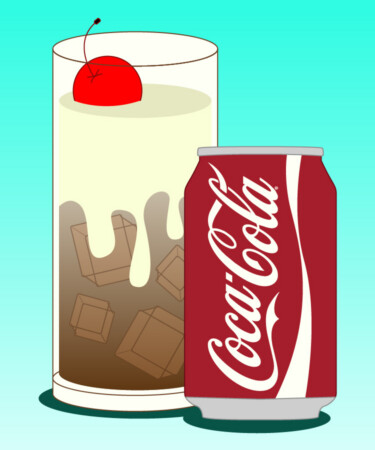
2026 is a testing time for dive bars. As rent and operational costs tick upward, the time-tested watering holes are dwindling in number, and the niche drinks they serve could be in jeopardy, too — like the Colorado Bulldog. The drink grew in popularity among the dive bar cognoscenti in the 1990s and early 2000s, according to Phoenix-based bartender Aaron Defeo. But now, he says, the Colorado Bulldog is a dying breed.
“I introduced some of my bartenders to the drink last year, and they had never heard of it before,” says Defeo, co-owner of Little Rituals, which received the Tales of the Cocktail award for best hotel bar in 2025. “It’s very generational. If you’re under 40, you’d probably struggle to know what the Colorado Bulldog is.”
Dive bars aren’t known for labor-intensive mixes, and generally, the most involved drinks they’ll do are a rum and Coke, a vodka soda, and the like. A White Russian is one of the most complicated drinks a dive bar can reliably execute (if it has half-and-half, that is), and if it can make a White Russian, it can make a Colorado Bulldog, which is coffee liqueur, half-and-half, and vodka punched up with just a splash of Coca-Cola. “It’s my No. 1 dive bar cocktail order because it’s probably the most complex thing that a dive bar can do,” Defeo says.
Defeo’s ideal Colorado Bulldog specs are 1 ounce of each coffee liqueur and half-and-half, 1.5 ounces of vanilla vodka, and between 1 and 1.5 ounces of Coca-Cola. The latter is up to the bartender’s discretion, however, as the drink is most often served at dive bars where Coca-Cola is dispensed from a soda gun — one of the most significant drivers of the Colorado Bulldog’s creation.
“Everyone’s talked about how cocktails changed pretty dramatically with the advent of the soda gun and the popularization of it from the ’50s to the ’80s,” Defeo says. “At the end of the ’90s and right at the beginning of the millennium, we were looking for new ways to put more things on the gun.”
Nailing the correct amount of Coca-Cola is important to yield the desired flavor and texture. Defeo teeters between 1 and 1.5 ounces — if he’s measuring at all — depending on the size of the cocktail glass. “You want it to be kind of like a float, but you also don’t want too much Coke in there,” he says. “That’s sort of the balance of that drink. You’re really just trying to give it a little lift, a little sparkle, but you don’t want too little, because then it doesn’t do anything.”
The amount of vodka is flexible, too. Whereas most Colorado Bulldog recipes call for equal amounts of each ingredient, Defeo says the drink benefits from the heft that a bit more vodka can bring. He pours in 1.5 ounces — sometimes 2 — of vanilla vodka, which prevents the drink from becoming a “milky, watery mess,” and instead yields a “clear and concise” quaff.
Exactly how the drink got its punchy name is uncertain, though Defeo and most other Colorado Bulldog enthusiasts suppose it came from Colorado State University’s old mascot, an English bulldog named Peanuts. Defeo says the drink probably started to catch on at bars geared toward college students, hotbeds for many soon-to-emerge drinks trends like Green Tea and Scooby Snack shots. Students flock to college- town bars where hot, new fads come about before heading home and spreading those drinks to other regions.
The Colorado Bulldog might have benefited from that pipeline, but its popularity has since waned. Much like the dive bars that serve it, though, the drink isn’t about fame and acclaim. When asked if a guest has ordered the drink at his well-reviewed cocktail bar, Defeo responds with a curt, “No.” He continues: “I just don’t think it’ll be found at a place like that.”
