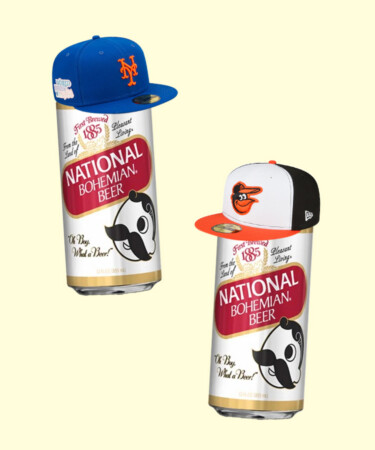
In 1986, the New York Mets won the World Series by defeating the Boston Red Sox in seven games. It’s unequivocally on the short list of best series of all-time, and its most pivotal moment — the ball rolling through Bill Buckner’s legs in game 6 — is one of baseball’s most indelible sequences. The win united New Yorkers at a time when the city felt battered. The victory also capped off a season that saw the Mets celebrate the National League pennant by partying so hard, they trashed the team plane.
At the heart of this adored and notorious club stood two men: general manager Frank Cashen, and manager Davey Johnson. The former assembled the 1986 Mets by nailing draft picks and pulling off shrewd trades and free agent acquisitions; the latter used some of the earliest forms of analytics to optimize the team’s on-field performance. The combination produced one of modern baseball’s most colorful World Series-winning crews. And surprisingly, none of it — the team, the ring, even Johnson’s revolutionary managerial style — would likely have existed without a Baltimore brewery.
Beer, Baseball, and Beginnings
In 1885, Baltimore’s National Brewing Company produced its first batch of Natural Bohemian, which locals affectionately nicknamed Natty Boh. By 1953, Natty Boh’s popularity created enough economic clout for the brewery to enable owner Jerold Hoffberger to invest in a baseball team. He was part of a group that purchased the St. Louis Browns and moved them to Baltimore, where they became the Orioles the following year. Just like that, the brewery behind Natty Boh was in the baseball business.
In 1965, Hoffberger assumed controlling interest in the Orioles. One of his first moves after ascending to head honcho was to assign operational control of the club to Cashen, who was National Brewing Company’s advertising director at the time. The choice was about as hand-picked as they come; Cashen had previously served as Hoffberger’s personal assistant before his work on developing campaigns for Natty Boh and the brewery’s sister label, Colt 45.
That same year, the Orioles promoted a young second baseman named Davey Johnson, where he bounced back and forth between the Orioles and its AAA affiliate in Rochester. He made the big club’s roster full- time in 1966, and became a key part of an excellent team that earned two World Series titles and four World Series appearances in six years. One of those appearances involved losing the 1969 World Series to the Mets, because the baseball gods occasionally can’t resist foreshadowing.
Johnson not only carried a reputation as a slick-fielding second baseman with some pop in his bat, he was known as a bit of a nerd. He graduated from Trinity University in San Antonio in 1964 with a mathematics degree, and he enrolled in graduate-level computer science classes at John Hopkins University during his playing days with the Orioles a few years later. During his Hopkins studies, he stumbled across “Percentage Baseball,” a 1964 book that used data-driven statistical theories to deconstruct baseball strategy. The book was light years ahead of its time, and it inspired Johson to blend his academic interests with his athletic profession.
One problem: Computers weren’t exactly easy to access in the late ’60s. However, Johnson knew the National Brewing Company owned an IBM mainframe system. After the 1968 season wrapped, Johnson asked Hoffberger if he could play around on his company’s computer. Hoffberger agreed, and Johnson went to work. Armed with a bunch of old-school punch cards containing Orioles batting data, he eventually produced what he dubbed “Optimization of the Baltimore Orioles Lineup,” a report that demonstrated the Orioles would score more runs if Oriole manager and renowned curmudgeon Earl Weaver let Johson bat second in the lineup instead of seventh.
The process was so intense, Johnson’s programming escapades sapped the memory of National Beer’s Colt 45 data for three different territories. (Remember, this was 1968, so your smartphone likely contains more power and capability than the computer behemoths of yore). But Johnson felt the results were worth the disruption, and he presented his findings to Weaver. After the presentation, the perpetually gruff Weaver threw Johsnon’s work in the trash almost immediately. All that toil and beer distribution disruption was for naught, at least at the time.
Cashen Cashes In
By 1975, National Brewing was struggling to stay afloat, and the brewery was acquired by Canadian plant Carling Brewing Company. This formed a new company, Carling-National Breweries, and new companies need new management. With this in mind, Hoffberger pulled Cashen from his Orioles duties and put him in charge of overseeing the shiny new toy. It lost its sheen rather quickly: In 1979, Hoffberger sold the Orioles and was left with no sway on the brewing side. That same year, Cashen parted ways with the beer industry and returned to baseball, landing a gig in Major League Baseball’s commissioner’s office.
In 1980, Cashen joined the New York Mets as the team’s general manager and chief operation officer. In doing so, he willingly entered baseball hell. The Mets were a dumpster fire: perpetually flirting with 100 loss-seasons; a barren farm system; lousy attendance that couldn’t even break 1 million in a city of 7 million residents at the time. Cashen slowly turned things around, drafting future phenoms like Darryl Strawberry and Dwight Gooden and pulling off massive trades for players like first baseman and future “Seinfeld” legend Keith Hernandez, arguably the Met-iest Met of all time. By 1984, the team was poised to gel. There was just one thing missing: a manager who could harness the team’s potential.
Turns out Cashen had just the right guy in mind. He knew Johnson as the manager of the Mets’ top minor league affiliate. More importantly, he remembered Johnson as the brainiac Baltimore Orioles second baseman who used the National Beer Company’s computer to figure out how to gain a competitive edge. He hired Johnson to pilot the team in 1984, and Johnson helped the team fully turn the corner through a revolutionary managerial style that deployed the type of data-driven analytical decisions he initially started toying around with on National Beer’s mainframe. Two years later, the ball rolled through Buckner’s legs in Game 6, the Mets won the Series in Game 7, and Cashen and Johnson entered New York baseball immortality.
A Special Team Made Possible by Beer
The 1986 Mets team that Cashen built and Johnson guided wasn’t merely a baseball club. It was a near- perfect reflection of the tropes associated with the Big Apple during that time: brash, proud, confident, and debaucherous to the point of being slightly dangerous.
They were also hard-partying bad boys with a penchant for mischief. No better example of this exists than the infamous flight the team took back to New York from Houston after clinching the National League pennant. Over the course of four hours, the players — and their wives — transformed a pristine DC-10 jet into the bathroom at CBGBs due to copious consumption of beer and hard liquor, cocaine-fueled shenanigans in the lavatory, seat destruction, vomiting, and a massive food fight. Was it wretched, gross, and unsanitary? Yes. Was it epic and strangely awesome in the way a Mötley Crüe post-concert after party was? Also yes. This oddly may explain why they were so adored by New York across all five boroughs. They were bad boys, but they were their bad boys. Given how crummy the ’70s and ’80s were in New York, they gave the city a much-needed sense of catharsis.
With the team’s meaningful magic and its deep-seated backstory, existential questions naturally arise. Would the 1986 Mets have existed without National Brewing Company and the popularity of Natty Boh? Would Johnson have gained access to a computer to run his proto-analytics experiment, given the uncommon nature of computing in the late ’60s? Would Cashen have set foot into the world of baseball had Hoffberger not asked him to run his new team? Would 1986 have been an even tougher year in New York if the Mets’ success didn’t give the city’s residents something wildly exciting to cling to?
It’s easy to say no. But mainly because it feels so impossible to say yes.
