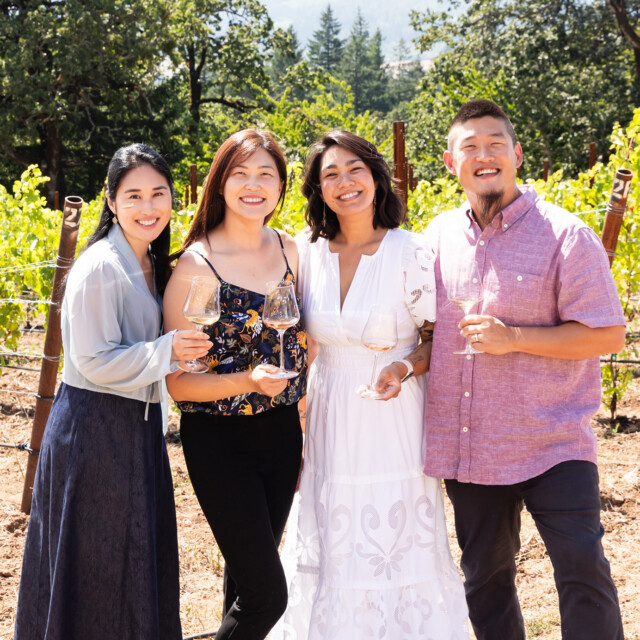
In 2020, Lois and Dave Cho became the first Korean American winemakers in Oregon when they launched CHO Wines in the Willamette Valley. The fast-growing winery quickly amassed a following and received critical acclaim, but they kept fielding the same question: “What informs your palate for wine?”
The answer to that question grew to become so much more than they expected. The two kept thinking back to the Korean food they enjoyed as children, saying that they ultimately hoped for the bottles from CHO Wines to complement their heritage’s cuisine. But pondering their response revealed a more sobering reality: The Asian-American wine scene is far less appreciated than its culinary counterpart.
Considering their wine as something to be paired with Korean food sparked the idea of hosting a potluck for AAPI folks around the Willamette Valley. The brainstorming snowballed from there, and turned into a full-blown festival. In hopes of placing Asian American–made wine on the same level as food, the Chos officially launched AAPI Food & Wine in 2023.
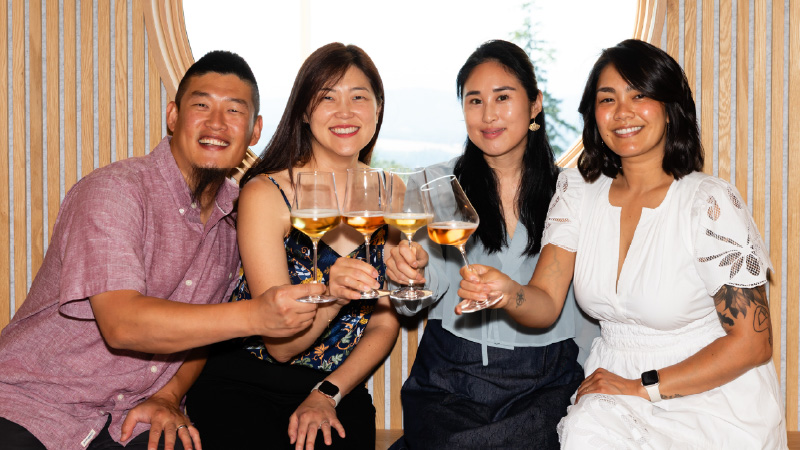
“The first year, we hosted 12 Portland chefs and five Asian American Pacific Islander-owned wineries from the Willamette Valley,” Lois Cho says. “We had 1,000 people show up, and it was sold out.”
Though it came together in a matter of weeks, the inaugural event’s response was sentimental. “Multiple people came up to me with tears in their eyes,” Lois says. “I knew it was going to be a kick-ass party, but I didn’t realize that it was going to be so emotional.”
That emotional response was proof of concept. Since its debut, AAPI Food & Wine has held three annual walkaround festivals in Oregon, inviting participants to set up stalls with samples for attendees to learn and taste. Earlier this year, it inaugurated its expansion to the East Coast with a three-day-long celebration in New York City. Each of the events has been a near or total sell-out. Now, a group of board members handle the nonprofit’s operations, including secretary and volunteer director Sylvia Choi and vendor relations and events director Jane Barmore.
In the U.S., AAPI communities have been taught to assimilate to American culture and keep quiet to avoid scrutiny, Lois says. But after generations of repression, an outward embrace of Asian American food and wine was cause for celebration.
“A lot of our history has been about flying under the radar and not making a fuss,” she says. “This new generation is now really coming more into the spotlight and saying, ‘This is our heritage, and this is how it plays into food and wine.’”
The first Oregon festival featured beloved wineries like Hundred Suns Wine and Et Fille Wines, as well as Portland-based restaurants like Sun Rice and Matta. The nonprofit has since grown to amass a roster of other well-regarded chefs, winemakers, and collaborators, hosting events with industry pros like winemaker Sashi Moorman of Evening Land Vineyards and James Beard Award-winning bakers Jin Caldwell and Kyurim “Q” Lee of JinJu Patisserie. During its NYC residency this March, AAPI Food & Wine partnered with Atoboy, a Korean restaurant among the city’s culinary elite. With big-name affiliations and one expansion already under its belt, the nonprofit is ready for more growth.
“We’re already in chats about doing events in Los Angeles, Seattle, Chicago, D.C., and hopefully Austin at some point,” Lois says. “We keep getting the requests.”
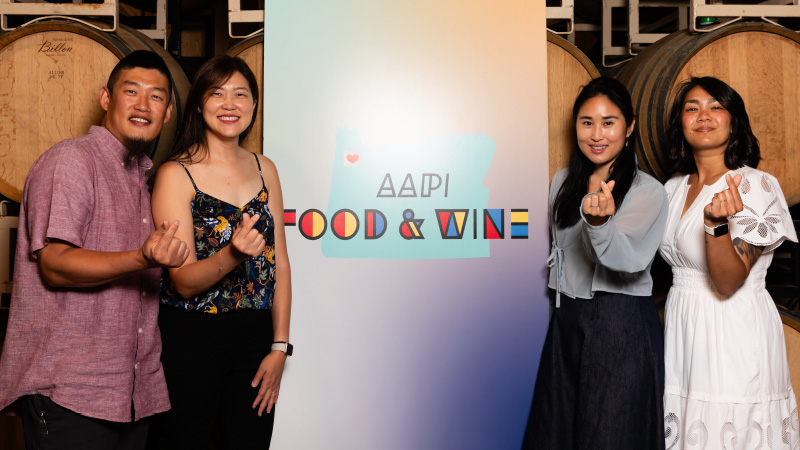
Lois hopes to highlight chefs and winemakers outside of the Pacific Northwest and New York metropolitan areas with these expansions. After focusing on well-known chefs at previous festivals, she wants to include up-and-coming cooks who operate small brick-and-mortars or food carts.
And as the culinary scene increasingly celebrates AAPI cuisine, Lois sees that the wine industry is beginning to catch on. Some of the most celebrated sommeliers and beverage directors of today are AAPI-identifying, leading a pack of others to follow suit.
“There are a bunch of newcomers who are sharing their experiences getting into wine and pursuing their Master Sommelier certification,” she says.
Just as the first festival grew from a potluck, AAPI Food & Wine has expanded beyond anything Lois imagined. The community of participants, partners, and attendees the festival has corralled is the biggest driver in fueling its momentum, she says.
“Now, it’s like people don’t even know we’re involved in it,” she says. “They’re just like, ‘Oh my gosh, have you heard of AAPI Food & Wine? I’m like, ‘Yeah, my husband and I actually started it.’”
