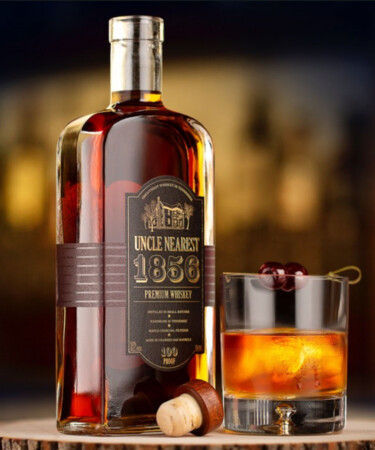
Nine months after being named receiver of Uncle Nearest, Inc., Phillip G. Young, Jr., filed a non-binding letter of intent to sell the embattled whiskey brand this past Friday. The filing comes just three days after the case’s presiding judge denied founder Fawn Weaver’s motion to reverse the company’s receivership.
Young will potentially hand all assets of the company — with the exception of three — to an undisclosed, African-American-owned investment firm, should the court approve the sale. The possible buyer has signed a non-disclosure agreement and will remain anonymous until the sale is finalized, which is expected to happen within 45 days.
The transaction does not include the company’s properties in Edgartown, Mass., and Cognac, France, nor any assets of Grant Sidney, Inc. Young previously eyed buyers for both the Massachusetts and Cognac properties. What will become of the outstanding assets remains a question.
Limited details are available about the brand’s forthcoming owner. The buyer intends to maintain the brand’s current workforce, leverage strategic partnerships to boost sales, and honor its existing cultural significance, Young says in the letter of intent.
The transfer in ownership will end Young’s nine-month stint as Uncle Nearest’s receiver. He was granted control of the business last August after the company’s lender, Farm Credit-Mid America, filed a suit against Weaver for defaulting on over $108 million. One month later, Farm Credit motioned to expand the receivership after discovering additional assets within Uncle Nearest, Inc. Weaver then motioned to terminate the receivership in December, which the case’s judge denied last Tuesday.
More details about Uncle Nearest’s buyer, ownership structure, and future brand strategies will emerge if the court approves the sale.
VP Pro Take
“While the identity of the buyer remains shrouded, the receiver’s description of its bona fides raise the possibility that it is MarcyPen Capital Partners, the Jay-Z-aligned fund that extended Uncle Nearest a $20 million bridge late last year. (The provenance and location of that sum was at the center of explosive testimony in court by Fawn Weaver, who freely admitted she had moved it out of the distillery’s account and into one controlled by Grant Sidney so that it could not be “snatched” by the receiver or lender, Farm Credit Mid-America.) MarcyPen does not appear to have its own website; an emailed request for comment to Pendulum Holdings, a vehicle group with which MarcyPen is affiliated, bounced back.
Neither Uncle Nearest nor Grant Sidney — the nominally unrelated business controlled by the Weavers that Atchley last week looped into the receivership due to ongoing scrutiny over commingled funds and operations — immediately responded to requests for comment from the firms themselves and Fawn Weaver individually.
Since it hit the docket, Fawn Weaver has posted no content related to the bombshell filing on Instagram, her preferred social-media platform. Her prodigious volume of videos regarding the receivership actually became a source of contention during the proceedings, with Atchley warning of potential sanctions for anybody who violated the “fine line between litigating a case while keeping public relations implications in mind and using the justice system as a vehicle to promote a specific narrative.” In the time since that notice, I have observed markedly less commentary on Weaver’s Instagram Stories and grid posts. A web page she had launched earlier this year to keep her fans abreast of “current filings and court developments” has not been updated since late April.
In signing the initial receivership order last August, Fawn Weaver legally ceded executive control of Uncle Nearest on a temporary basis. (This is why her gambit in March 2026 to enter the firm into Chapter 11 proceedings was rejected so quickly by a bankruptcy judge; the dismissal is on appeal.) But for it to be sold to a new owner entirely would mark an enormous loss of status for Weaver, who has styled herself as #ThePeoplesCEO and cultivated a prominent media presence based on her carefully curated image as a visionary Black entrepreneur.
The co-founder of a meteorically successful distillery with a cinematic history (albeit one that the Weavers did not themselves uncover; that was The New York Times’ Clay Risen in 2016) gets booked for keynote speeches by the Brewers Association, for commencement addresses at historically black colleges and universities, and as a guest judge on “Shark Tank.” The “People’s CEO” that ran that firm into the ground, became increasingly antagonistic towards the receiver that she had helped the court to select, and mismanaged its books to the point that a fire sale was the only move left on the board… not so much.
According to the receivership judge’s most recent order, the latter scenario may hew more closely to Fawn Weaver’s true legacy than the former. Atchley, who throughout the document hammered what he perceived as her lack of credibility, wrote that “Uncle Nearest—under Fawn Weaver’s control—was far better at spending money than making it.”
Soon, somebody else may try their hand at the task.” —Dave Infante, VinePair columnist and contributing editor
A version of this VP Pro Take originally appeared at Fingers, Dave Infante’s independent newsletter about drinking in America. Dave Infante contributed reporting to the news item above.
This story is a part of VP Pro, our free content platform and newsletter for the drinks industry, covering wine, beer, and liquor — and beyond. Sign up for VP Pro now!
