Cracking open a cold one is a common post-work ritual across many cultures today, but archaeologists discovered the practice dates back at least 4,000 years.
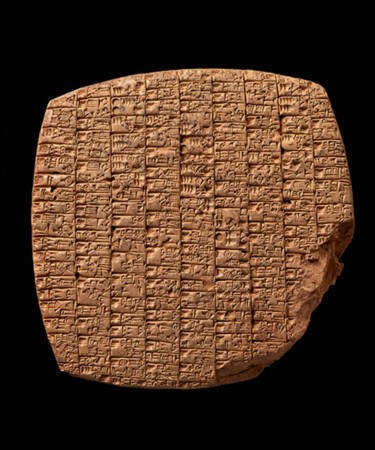
The National Museum of Denmark has been home to a robust collection of tablets inscribed in now-extinct languages from early Middle Eastern civilizations for over a century, but archaeologists there, along with colleagues from the University of Copenhagen, only recently began to research them. The scholars deciphered a list of kings, administrative documents, and magic spells written in cuneiform — the tablet-writing system that ancient cultures in Iraq and Syria adopted around 5,200 years ago. They also found a few receipts for beer.
“A great many of the cuneiform tablets we have today bear witness to a highly developed bureaucracy,” says Troels Pank Arbøll of the University of Copenhagen. “It is therefore not surprising that one of the tablets in the National Museum’s collection contains something as commonplace as a very old receipt for beer.”
The researchers analyzed, identified, and digitized the collection of inscriptions for a project titled Hidden Treasures: The Cuneiform Collection of the Danish National Museum. Early civilizations adopted cuneiform to keep administrative records as their societies developed, Pank Arbøll says.
He tells the Daily Mail that the inscriptions show multiple instances of beer having been used as payment to employees. One particular inscription dates back to 4,000 years ago in Umma, an ancient city in what is now southern Iraq. The team deciphered text listing 16 liters of “high quality beer” and 55 liters of “ordinary beer,” per the Daily Mail, both of which were likely workers’ payments.
Based on other accounts of ancient beer, the liquid was likely thick in texture. “Beer was presumably high in nutrition and considered an integral part of how these earliest urbanised populations lived,” Pank Arbøll explains to the Daily Mail.
