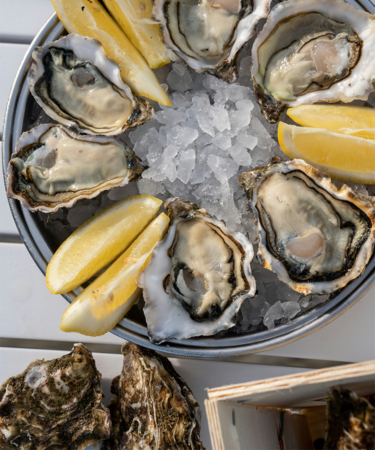
Oysters are a glamorous dish. Often served on a lofty tower over a pile of crushed ice, they gleam and glisten as they await a spritz of lemon juice or dash of mignonette. Pair the bivalves with some Champagne, a salty Sancerre, a crisp Martini, or even a pint of Guinness, and you’re in for a glitzy treat.
What’s less glamorous, however, is actually ordering oysters. Whether at a dedicated raw bar with an in-depth oyster menu or a casual restaurant with just a few varieties listed, names like “Blue Point,” “Pemaquid,” and “Bombazine” can seem like a foreign language. And unlike wine lists, which are typically accompanied by a sommelier to guide guests through complex terms, having an oyster expert on deck is a bit less common.
Snapping an Instagrammable pic of the aesthetically arranged half shells is one thing — but getting the exact flavor and texture that you want is another. Depending on the variety and location of origin, oysters bring a wide range of flavors. Before diving into the menu, it can be helpful to decide whether you want creamy, almost sweet oysters or briny ones that taste like a gulp of fresh salt water. Beyond flavor, you should also determine if your preferred texture is meaty and hefty or lean and easy to swallow.
To help make your oyster-ordering experience a bit easier, VinePair tapped Ben Crispin, general manager at Maison Premiere, one of Brooklyn’s most celebrated raw bars, to describe the flavors and textures of 15 different varieties. With his help, we charted the oysters across two scales: briny to creamy and lean to meaty.
Next time you find yourself face-to-face with a menu of unknown oyster varieties, turn to this guide to make sure you know what you’re getting.
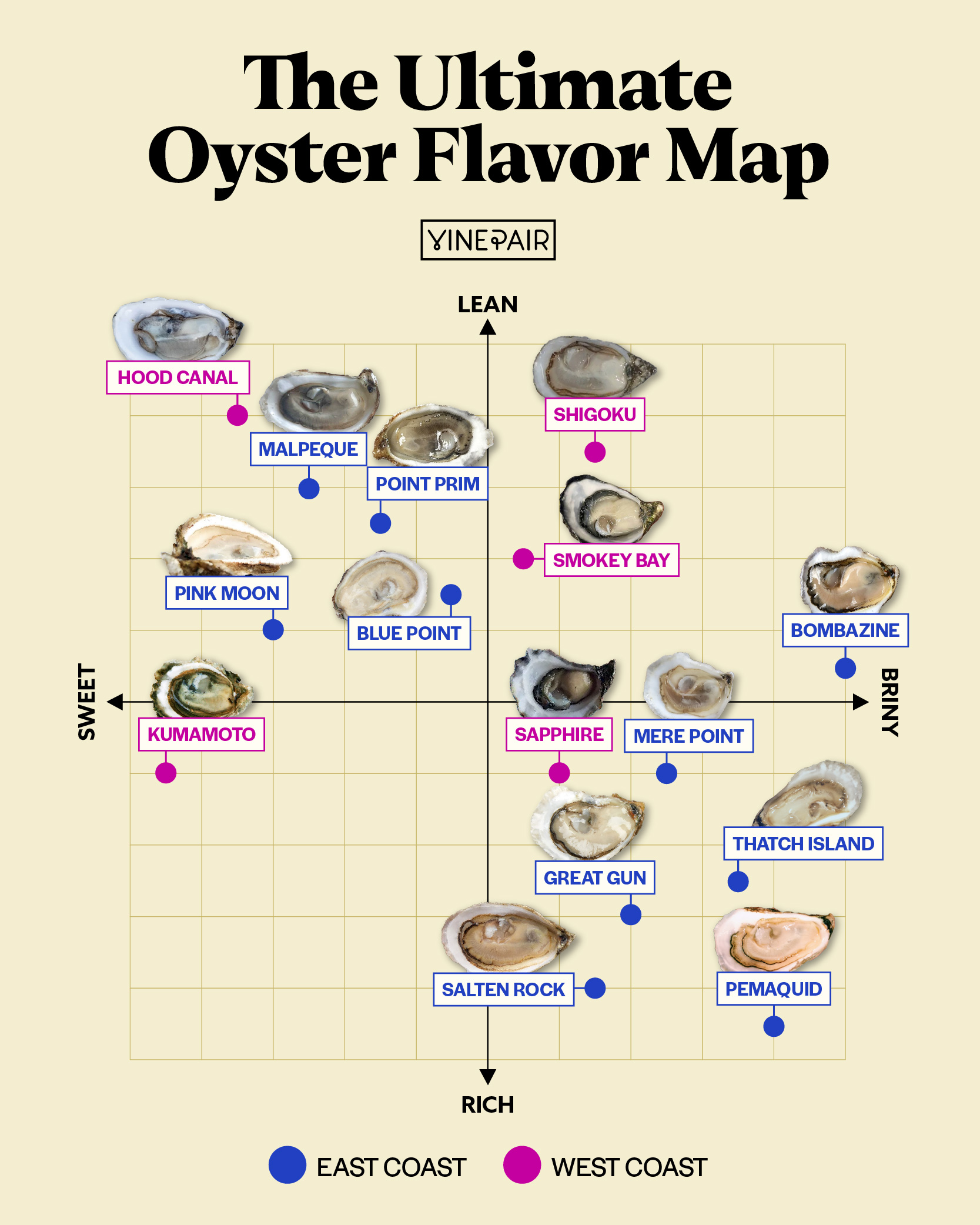 Image retrieved from Mitili Mitili – unsplash.com
