Ah, Burgundy. The faintest mention can elicit a slew of different responses: adoration, for its pure and expressive Pinot Noirs and Chardonnays; fatigue, for its overarching dominance across wine lists; frustration, for its prices that just seem to keep climbing. Ever since the monks began making wine in Burgundy over a thousand years ago, the region has been a universal touchstone for terroir-driven wines. While it long stood in the shadow of its bigger and beefier — both in wine style, production scale, and ubiquity — Bordeaux cousin, recent decades have watched as Burgundy wielded its variable yet enticing vintages, increasing scarcity, and downright deliciousness to fight its way to the top. As its clout compounded over the last few years, Burgundy seems to have become, as Kate Dingwall so succinctly declared, “untouchable.”
“Burgundy is generally so expensive and brand-based,” says Zachary Jarrett, co-owner of Café Triste and Psychic Wines in Los Angeles. “There’s no way for someone to casually interact with it, and the pressure to adopt conventional wisdom is strong.” This begs the question: What now? Is there hope for wine lovers who just want to enjoy a bottle of taut Burgundian Chardonnay without risking financial ruin? Is it possible for a region with so much history and tradition to feel new again?
Look past the Raveneaus and the DRCs, the Leflaives and the PYCMs, and signs point to “yes.” While it’s true that the price of land is exorbitantly high, and even young winemakers looking to take over their families’ estates face strict inheritance laws and pricy fees, these facts have only made it difficult — not impossible — for fresh blood to break into the scene. A new wave of winemakers is on the rise, and they’re breathing new life into the region from all different angles.
Ed Szymanski, co-owner of New York City restaurants Dame, Lord’s, and Crevette, has found that many emerging winemakers in this region approach their work with a traditional mindset while adopting techniques that could be considered natural. “They want to make wine here because it’s an incredible terroir that produces some of the world’s greatest wines,” Szymanski says. “It’s [about] paying homage and respect to that whilst bringing their own stylistic choices.”
Paris McGarry, wine director at NYC’s Cove, has also noticed the arrival of an exciting new batch of winemakers bringing a “fresh perspective” to Burgundy. She points to “stories of a younger generation, who often come in as outsiders, and figure out a way to blossom in such a historically prestigious part of wine.” Even so, she says, this new generation is not immune to the region’s “exclusivity” — many of these estates, at under 10 years old, have already seen price spikes and have become difficult to find — but that doesn’t have to be a bad thing. Nikita Malhotra, partner and wine director at Smithereens in the East Village, describes a “Pokémon”-esque sense with which many consumers approach emerging producers in Burgundy. “A collector [can] taste a wine in its infancy that later becomes acknowledged as great,” says Malhotra. “How exciting!”
Regardless of their differing styles, scales, and points of view, these projects share a common goal. “[This is] a Burgundy that feels less concerned with upholding recent ‘tradition’ and more focused on capturing a moment in time,” says Alicia Kemper, owner of Buvons, a wine bar and bottle shop in Long Beach. And the results — sincere wines with the distinct terroir and seriousness that can only be found in Burgundy — speak for themselves. Here are 10 of the producers who are leading the next generation of Burgundy.
Bastian Wolber
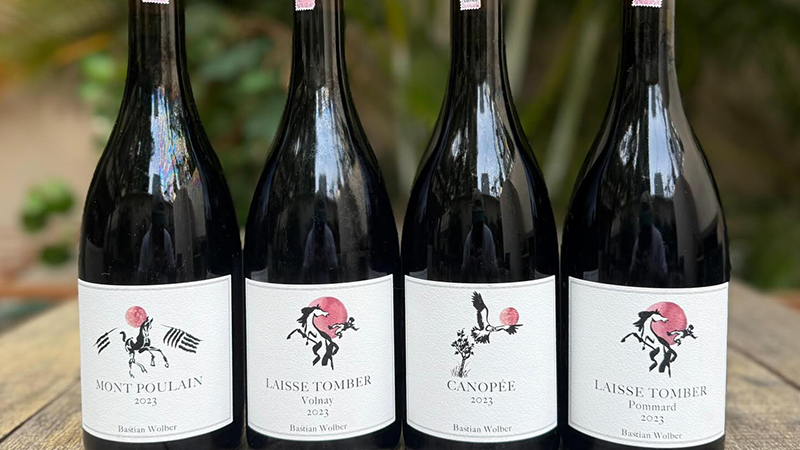
German native Bastian Wolber was pulled into the world of wine by his brother Christoph and a fateful bottle of Ganevat. At the time, Bastian was pursuing an unfulfilling degree in economics while his brother was traveling across Burgundy to make wine with some of the region’s greats. That bottle stirred something in him, and Bastian soon took off on a winemaking journey of his own. Stints at Domaine Leflaive, Rudolf Trossen, and Jean-Marc Dreyer eventually led him back to the beginning. In 2019, he found himself working the harvest with Jean-François Ganevat, but a mid-harvest accident forced him to cut the experience short. Luckily, Bastian was undeterred. “He set about purchasing fruit from trusted friends in wildly disparate regions like the Savoie, Baden, and Alsace,” Malhotra says. He soon returned to Burgundy, where he began working alongside Jean-Yves Bizot and has since acquired seven acres across Côte de Nuits and Côte de Beaune. Still, with so many different experiences, Malhotra believes that “he represents an interesting future for wine in the region.” Bastian’s wines are honest and pure. They showcase the beauty that can stem from persevering and adapting to follow your dreams. “You can feel his influences,” Kemper says. “But the wines are distinctly his: lifted, precise, and full of tension.”
Charles Boigelot
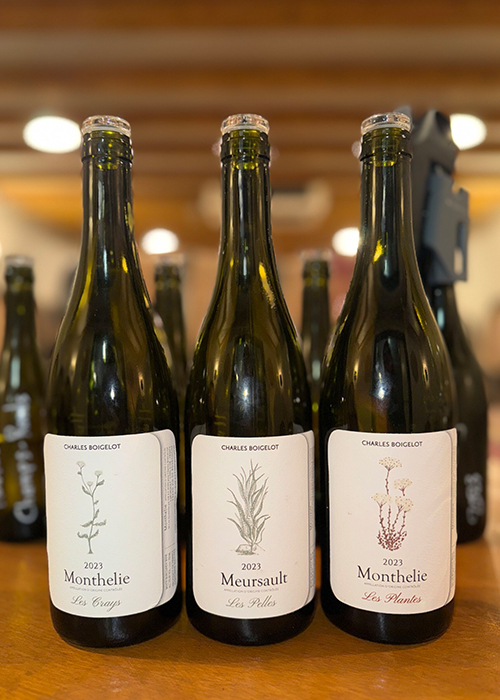
“Charles Boigelot is a name that you don’t hear about, but you will,” Szymanski says. With five years of winemaking experience already under his belt, this rising star produced his first vintage before even reaching legal drinking age in the United States. Boigelot is the son of the esteemed Eric Boigelot and is now the fifth generation of winemakers in the Boigelot family, but he’s determined to produce wines that are unique to him. At 15 years old, he began a string of apprenticeships that would help to shape his style of winemaking. After time at Domaine Coche-Dury and Domaine Paul Pillot, Charles returned to his family’s 22-acre estate in Meursault in 2022, feeling sufficiently inspired to start his own production. Unlike his father, Boigelot’s reds are macerated in whole clusters, and the whites come in contact with the lees during fermentation. All the wines are pressed slowly and gently, aged in used oak, and produced along the lunar calendar when possible. With only a few vintages in the books, Boigelot undoubtedly has a bright future ahead.
Domaine Dandelion
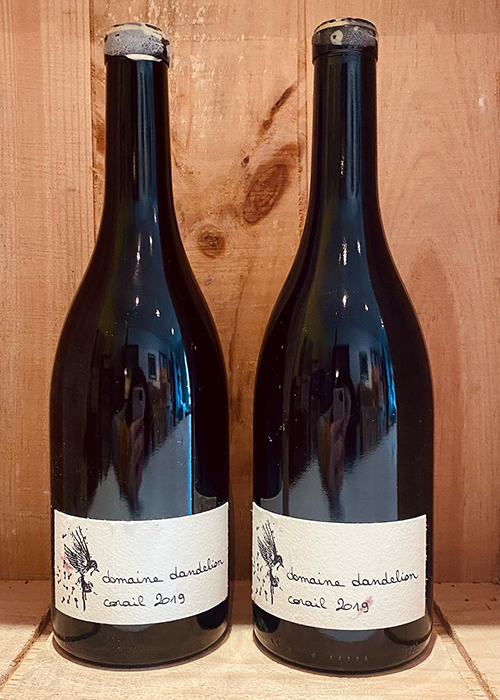
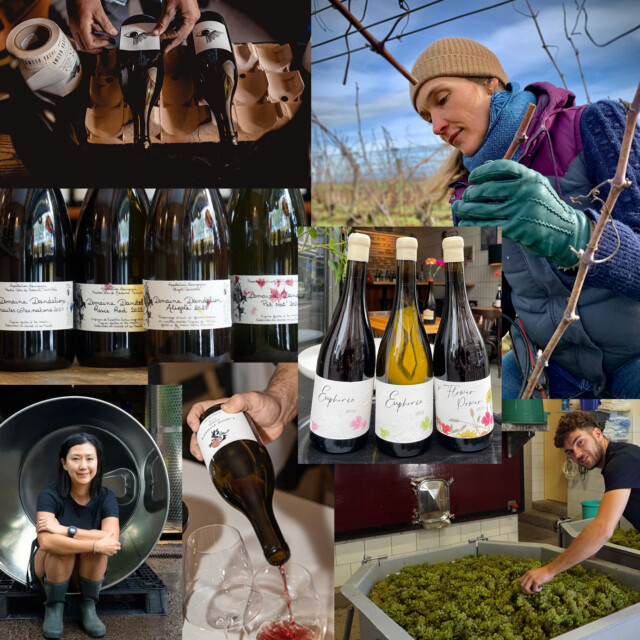
Morgane Seuillot was born and raised in Burgundy, but her family’s ties to winemaking are not what one might expect. Her father actually trained horses to plow vineyards. Still, Seuillot was drawn to the winemaking world and, while seeking out vineyards, eventually crossed paths with Christian Knott. Originally from Australia, Knott was the head winemaker at Domaine Chandon de Briailles when the two met, a role that allowed him to test a range of natural and experimental winemaking techniques at an established estate. Seuillot soon acquired vines of her own, and established Domaine Dandelion in 2016. It now encompasses about 10 acres across six parcels in Hautes-Côtes de Beaune. The vineyards are alive with diverse flora and fauna, and a light touch in the cellar allows that life to shine through with a hint of whole-cluster, carbonic maceration imparting an unmistakable style in every bottle. “The wines have real depth for the appellation,” Kemper says. “And the old-vine Aligoté, planted in 1944, is worth seeking out.” Despite their modest production, Seuillot and Knott have catapulted to the top of Burgundy ranks, and their story is sure to fuel the fire for any winemakers following in their footsteps.
Domaine de Cassiopée
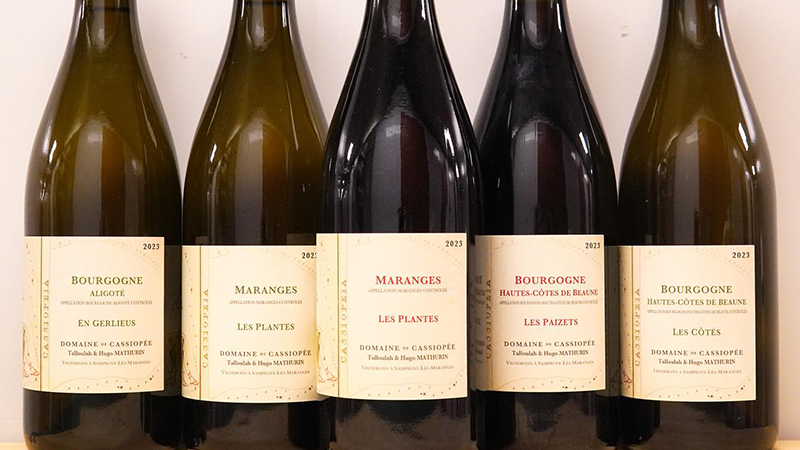
Nestled deep in the southern corner of the Côte de Beaune, Hugo Mathurin and Talloulah Dubourg expertly wield the region’s cool climate to produce wines with distinct levity. The couple found each other while studying oenology in Bordeaux but soon parted ways to glean experience from Benjamin Leroux, Jacques-Frédéric Mugnier, and Jean-Marc Roulot. They developed a proclivity for fresh, lifted wines and, upon reuniting, made it their mission to settle in a region that would be well suited to this style even amidst changing climates. When a 12-acre estate in Sampigny-lès-Maranges became available in 2020, Mathurin and Dubourg didn’t think twice, and Domaine de Cassiopée was born. They’ve employed organic viticulture since the beginning, and biodynamic principles guide their work in the cellar where they produce eight cuvées representative of the estate’s eight parcels.
McGarry admires the couple’s determination in the face of challenges. “Their wine keeps getting better every year,” she insists. “[The] 2023 vintage, which was hard for a lot of producers, is so impeccable from them.” Armed with the powers of anticipation and sheer motivation, Mathurin and Dubourg are at the forefront of Burgundy’s (cooler) future.
Guilbert Gillet
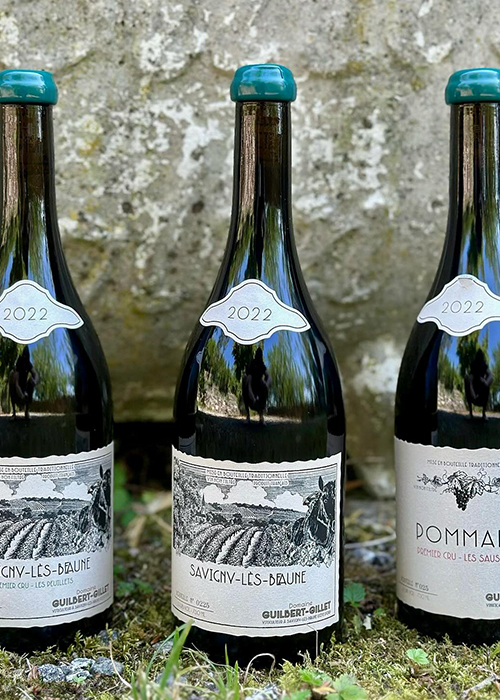
Benjamin Guilbert’s winemaking journey originated from a scientific perspective. Oenology school in Mâcon was soon followed by an oenologue diploma in Montpellier and later a master of science degree. During his studies, Guilbert worked with winemaking legends across the globe, which strengthened his passion for the vines. By 2020, Guilbert and his partner René Gillet had settled in Savigny-lès-Beaune to open their own estate. The winery’s practices are simultaneously free-form yet disciplined. The farming is guided by each parcel’s individual needs, and the pair make decisions in response to the vines’ reactions. Experimenting with different techniques is common and, with his scientific background, Guilbert’s curiosity makes sense. Most of the wines are produced from a single parcel to effectively capture the distinct terroir and to showcase the discrete effects of experimentation. “Guilbert Gillet’s wines are light, elegant, and pure,” Szymanski says. “[This] deft touch in such a young winemaker is very impressive.” These wines are begging to be studied, understood, and enjoyed. They are wines that you can geek out over, and the wine geeks have certainly taken note. After just a few vintages, in true Burgundy fashion, Guilbert Gillet’s wines have become nearly impossible to find.
Icy Liu
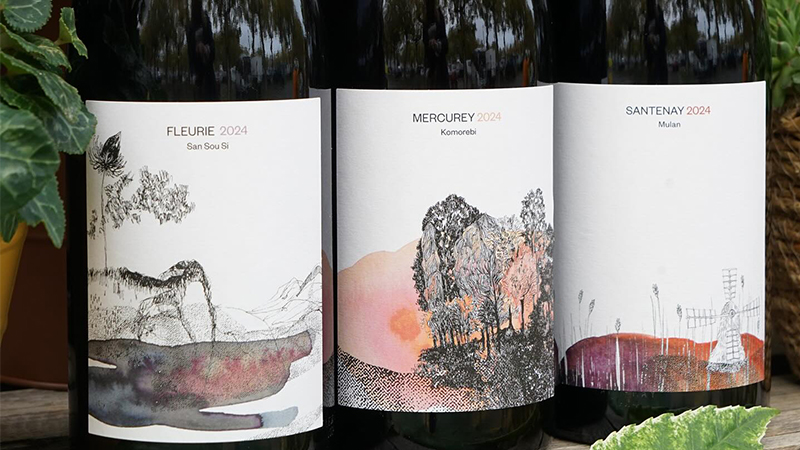
Icy Liu came to New York City from her home of Taipei to pursue a degree in engineering and later a career in finance. Realizing that the reality of her pursuits was not as fulfilling as she had hoped, she found a passion for wine as another avenue of expression and creativity. In 2018, Liu ditched the finance world and hasn’t looked back. Over the years, she earned an oenology degree in Burgundy, worked at wine importer Becky Wasserman and Co., and apprenticed at estates across Burgundy, New Zealand, and the United States. Through each experience, Liu’s desire to make her own wine grew stronger. Her dreams finally came to fruition in 2022 when her friend Bastian Wolber shared some grapes from old vines in southern Beaujolais. She vinified the grapes in an Auxey-Duresses cellar that’s become a common starting point for the region’s up-and-coming winemakers. Now in her third vintage, Kemper describes Liu as “one of the most compelling newcomers in Burgundy right now.” In addition to sourcing grapes from vineyards across Côte de Beaune, she has continued purchasing fruit from the same vineyard in Beaujolais, where the grapes are farmed organically and she has a close relationship with the farmer. As she looks to future expansion, Liu is dedicated to sourcing fruit from organic estates and maintaining relationships with the growers. “The wines have real fluidity and energy,” Kemper says. “And she’s only just getting started.”
Jérémy Carteret
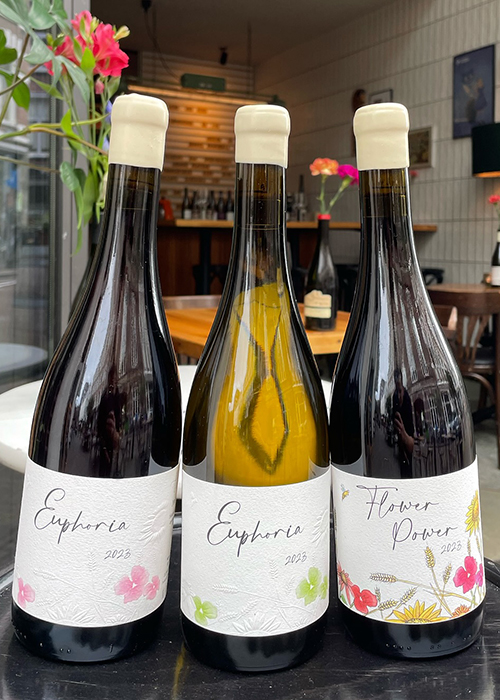
Jérémy Carteret’s story follows a somewhat traditional thread: His father spent a lifetime working for Comte Armand, he studied oenology in Montpellier, and he worked under Benjamin Leroux for nearly a decade. When it finally came time for Carteret to make his own wines, he began with a small parcel from his mentor that yielded fewer than 400 bottles. Production grew modestly each vintage, only increasing by around 100 bottles, until 2022 when Carteret decided to rent vineyards of his own. He farms a little over two acres and supplements with fruit purchased from other vineyards where he’s able to oversee the farming. In the cellar, Carteret’s work incorporates many methods such as spontaneous fermentation and gentle pressing. While Carteret doesn’t necessarily ascribe to the trendy natural wine movement, he is committed to showcasing the grape’s unadulterated characteristics. The result is a balance of purity and restraint that is sure to captivate consumers for years to come.
Les Horées
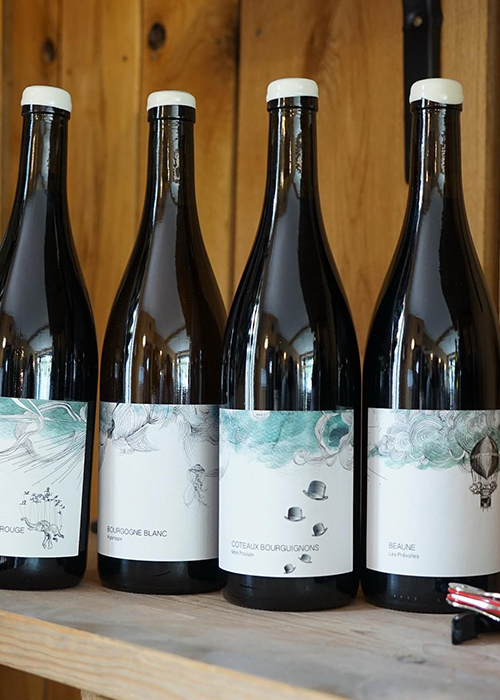
Catharina Sadde was born in Germany and spent the early years of her career as an acclaimed chef. She caught the wine bug after working a harvest in Germany’s Nähe region and soon set off on her winemaking journey. Her curiosity took her from wine school in Germany to an oenology degree in Montpellier to apprenticeships with the likes of Domaine de la Romanée-Conti, Cécile Tremblay, and Comte Armand. All the while, Sadde was determined to start her own project where she could call the shots. “She is both deeply thoughtful and completely unfiltered about the realities of Burgundy,” Kemper says. Finally, after accumulating teeny plots throughout Beaune, Volnay, and Pommard in 2018, she established Les Horées. In addition to her own vines, which total about two acres and change, Sadde purchases fruit from like-minded farmers, so her estate is officially considered a négociant project. Regardless, all the fruit is farmed organically and biodynamically, and cellar work staunchly limits intervention. The name of the estate, Les Horées, is derived from Greek mythology, and Sadde interprets it as representing the changing seasons. It’s fitting, Kemper says, as “the wines [reveal] a delicate yet serious expression that is changing all the time.”
Les Jardins Vivants
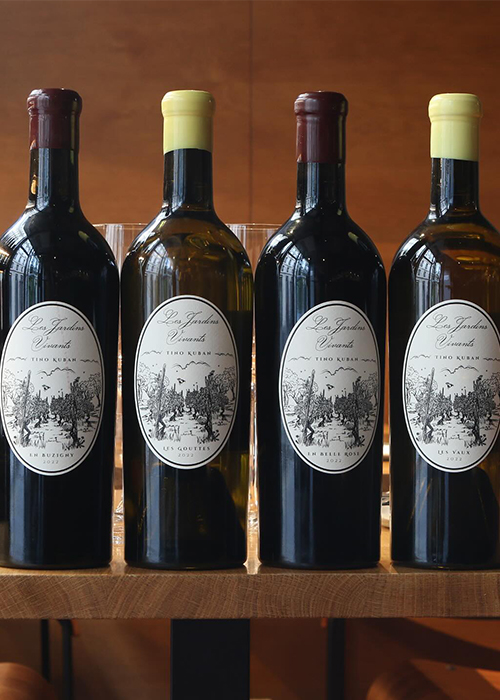
After taking over a progressive estate in the Meursault appellation, Tino Kuban renamed the estate Les Jardins Vivant — or The Living Gardens — and set out on taking farming-first winemaking to the next level. With just about four acres of vineyards, he has the capacity to tend to the vines with the utmost care and thoughtfulness. He employs Echalas training methods and allows cover crops to grow freely for soil diversity. Harvests are slow and intentionally timed to promote phenolic ripeness, and the vines are treated biodynamically when possible. As one might expect, Kuban’s production is tiny, but quality over quantity has never been so relevant. Szkymanski applauds Tino’s ability to deliver a range of styles. “The density that the Les Jardins Vivants wines have is very hard to achieve,” Szymanski says. With ambitious and accomplished wines, and a resume including the likes of Jura legend Pierre Overnoy and Rhône Valley favorites Dard and Ribo, it won’t be long before Kuban joins the ranks of his mentors to become one of the region’s greats.
Vin Noé
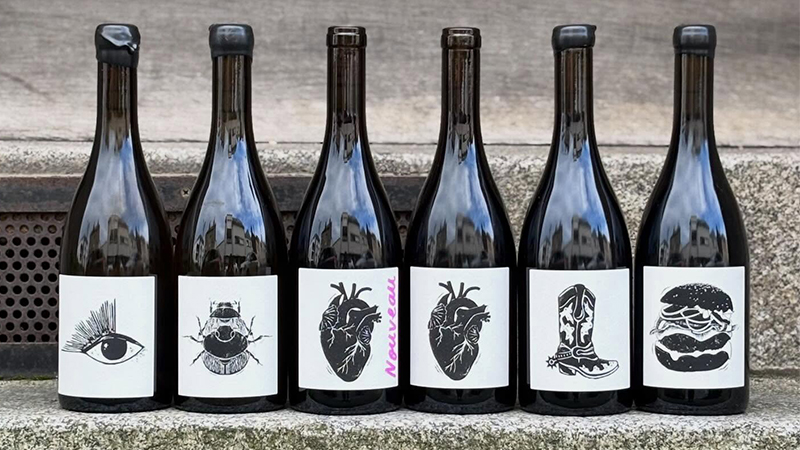
Although Jonathan Purcell’s journey to winemaking is much like many others, his California origins and singular destination set him apart. He moved to Burgundy in 2011 to work with some of the region’s esteemed winemakers and, after a few years, began itching for a project of his own. Purcell started making wine in any free time he could find and, by 2021, Vin Noé became his sole focus. In addition to prized parcels that he leases in Saint-Aubin, Puligny, and Pommard, Purcell sources grapes from organic vineyards spanning Beaujolais to Côte Chalonnaise. Nothing is added or removed in the cellar and, aside from the purchased fruit, Vin Noé is essentially a one-man show. While the négociant cuvées offer an accessible glimpse into his stellar winemaking abilities, his aptitude for farming is on full display in the single-vineyard bottlings. “He’s not in a hurry,” Kemper says. Instead, he’s “experimenting vintage to vintage, crossing lees between cuvées, [and] extending élevage.” With his unequivocal commitment to patient and intentional production, Purcell’s wines exist in sheer defiance of the belief that natural wines are unfit to age by developing exceptional precision and tension in every passing year — traits that have made the wines unsurprisingly popular. Nevertheless, Purcell is commendably unwilling to sacrifice quality for volume, and demand outpaces production at every release. Alas, a girl can dream.
