In the world of wine, reds and whites may dominate, but the spectrum of colors is far more kaleidoscopic: whimsical salmon-pink rosés, bright magenta co-ferments, and the now ubiquitous skin-contact orange wines.
In China, though, an even older category sits just outside this palette: huangjiu, which translates to “yellow wine,” named for its noteworthy color. It’s the country’s original grain wine, and one of its oldest alcohol-focused traditions.
This product is older than sherry, funkier than sake, and hiding in plain sight in Chinatowns everywhere. So what exactly is huangjiu and what does it taste like? Here’s what you need to know.
What Is Huangjiu?
Huangjiu is an undistilled grain wine made from water, grain, and qu, a fermentation starter made from grain and mold. The earliest huangjiu can be traced back to the Han Dynasty (206 B.C.E. to 220 A.D.) when qu was first discovered. A range of grains can go into it — rice, glutinous rice, wheat, sorghum, millet, or blends of them — yielding wines that range from pale straw to dark brown in color and thin to incredibly thick in texture.
Compared to baijiu, a clear grain spirit and one of China’s best-known alcohol exports, huangjiu is gentler: 8 to 20 percent ABV versus baijiu’s 35 to 60 percent ABV. Like whiskey or wine, huangjiu can also be aged, deepening into a golden, caramel-tinted wine with savory, nutty, and even tropical fruit notes. Baijiu, on the other hand, is a common accompaniment for raucous banquets and business deals, and can have a clear, crisp finish or a strong, deeply umami undertone.
A Brief History of Huangjiu
For much of Chinese history, huangjiu, not baijiu, was the national drink. As author Derek Sandhaus notes in his book “Baijiu: The Essential Guide to Chinese Spirits,” the first Chinese alcohols contained a motley of grapes, hawthorn fruit, rice, and honey, but the invention of huangjiu raised the bar for flavor and potency. At the time, alcohol was primarily a luxury good for the country’s elite rather than a daily necessity. (In other civilizations, people fermented to eliminate the risk of an unsanitary water supply, but in China, tea already solved that.)
Hundreds of years later, distillation came to China and spurred the production of baijiu as well as a class divide: Poets, scholars, and elites all wanted to sip on elegant huangjiu, whereas farmers gravitated toward baijiu, which was stronger, cheaper, and required less grain.
Huangjiu’s fortunes shifted dramatically after the People’s Republic of China came to power in 1949. The Communist government standardized and accelerated baijiu production and invested heavily in brands including Luzhou Laojiao, Red Star, and Kweichow Moutai, slowly pushing out huangjiu as a result, according to Sandhaus. Only in recent years has huangjiu resurfaced in the public imagination, revived by nostalgia, low-ABV drinking trends, and a new generation of brewers in China and across the diaspora.
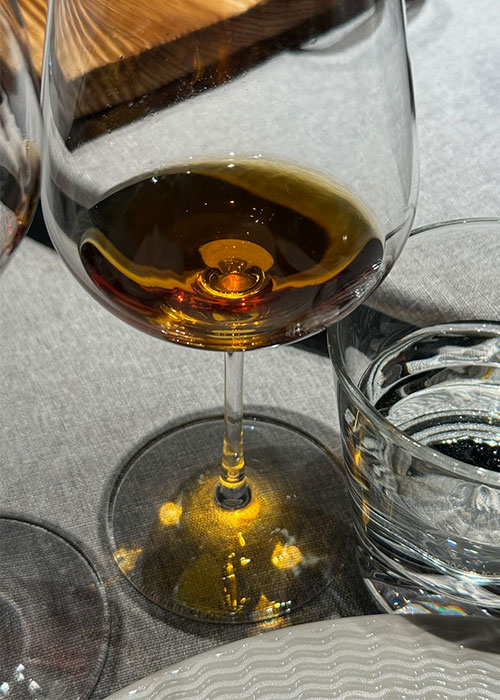
Today, huangjiu is most commonly produced in China’s cities along the Central Plain and coasts. The most popular bottlings come from Shaoxing, Zhejiang, which is known for its water quality and fermentation culture. Mijiu, which translates to rice alcohol, is another popular form of huangjiu. But many other styles are produced outside of this region and with various grains as well.
What Huangjiu Tastes Like
Most Americans know huangjiu through Shaoxing wine, the cooking staple found in every Chinese grocery store. This dark amber wine is mildly sweet, nutty, and full-bodied, imparting an intense, intoxicating aroma to dishes. However, most grocery store bottles are undrinkable since producers add salt to the brew. While the salt extends its shelf life, it’s mostly done to categorize the product as a cooking ingredient and avoid the alcohol import tax. When prepared as a beverage, it is typically warmed and paired with dried plums or slivers of ginger. Huangjiu is also traditionally gifted at weddings as part of the wife’s dowry.
Even within Shaoxing, there are different styles of huangjiu brewing such as yuanhong and huadiao. Both are semi-dry sherry-like wines, except the latter is sweeter due to the addition of extra rice during the fermentation process. Beyond this region, northern Fujian and Jiangxi also have locally made rice wine. These versions typically use glutinous rice and red yeast rice, a fermentation starter known as hong qu, resulting in a blend that’s bright vermillion and as funky as oxidative wines.
When Allen Cao, founder of the Fujianese rice wine brand Yaba in New York City, travels to Fuzhou to research huangjiu, he’s often surprised by the dominance of aged huangjiu. “Fresh, unfiltered qinghong (Fujianese huangjiu) is mostly used for cooking and aging,” he says. “But drink it young, and it has pleasant berry and fruit notes almost like sherry. As it ages, everything mellows out into an earthiness.”
Huangjiu might be China’s proclaimed yellow wine, but don’t mistake it with other “yellow wines” around the world. Vin Jaune, which translates to yellow wine in French, is one example, produced in the Jura region in eastern France. Made with late-harvest Savagnin grapes, it undergoes a process similar to sherry and matures in a barrel under a film of yeast. Coincidentally, the nutty, oxidative, savory flavors still sometimes overlap with huangjiu in uncanny ways.
Where to Find Huangjiu
Outside of China, finding drinkable, unsalted huangjiu requires a bit of effort. In New York, bottles from brands like Chengang, Gu Yue Long Shan, Nu’er Hong, and Pagoda Benjiu appear in Chinese liquor stores and restaurants. Restaurants like Manhattan’s Shanghai-focused Che Li and YongChuan offer huangjiu alongside soy-braised dishes and platters of seafood.
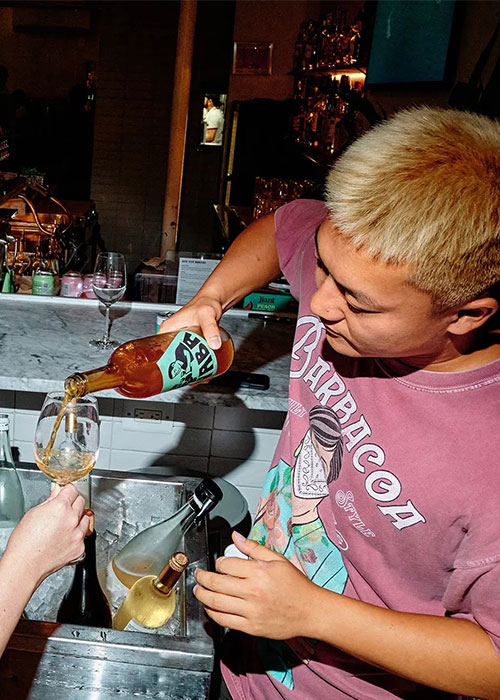
Other times it appears in cocktails. Spring Bar in Manhattan’s Chinatown features a crisp, dry Martini with a cucumber-infused huangjiu, pickle brine, chili, and sesame oil, meant to evoke a refreshing cucumber salad. At Brooklyn’s modern Fujianese restaurant Nin Hao, bartenders fashion a savory highball with peanut butter tequila, Fujianese rice wine, soy sauce, sesame-infused dry vermouth, and club soda. Several pop-ups around the city, including Yaba and the Fuzhou Sisters, serve glasses of Fujianese rice wine and sometimes infuse their brews with jasmine, osmanthus, and grapefruit juice. New York may have one of the highest concentrations of huangjiu, but with a little digging, it’s possible to locate this wine in other cities.
Across China and greater east Asia, huangjiu and baijiu bars are much more common. At Healer Bar in Shanghai, cocktails feature purple rice huangjiu paired with tangy milk alcohol and smoked huangjiu shaken with pu’er tea. Meanwhile in Chengdu, Sichuan, the head of bar at Upper House Chengdu, Nick Lappen, has adapted it into a refreshing cobbler with raspberries. Still, adding huangjiu into cocktails is a relatively recent phenomenon. If you ask anyone from the older generation, many prefer to sip aged huangjiu neat in slightly warm tiny cups.
